A crack in the wall never fixes itself. A door that scrapes the floor will not suddenly swing free. And water pooling against your foundation after every rain is not a minor drainage nuisance: it is a countdown. Commercial foundation repair is not a maintenance line item you can defer until next quarter. It is an urgent intervention that separates buildings that hold their value from buildings that lose tenants, fail inspections, and eventually get condemned. This article walks you through the warning signs, the repair-versus-replacement decision, and why a diagnosis-first approach is the only responsible path forward. No DIY tips. No patchwork promises. Just the information you need to protect your asset before the damage compounds beyond affordable correction.
Table of Contents
- Why Commercial Foundation Problems Demand Immediate Attention
- 7 Critical Signs Your Commercial Foundation Needs Repair
- Repair vs. Replacement: What Commercial Property Owners Need to Know
- Why Foundation Repair Should Involve a Broader Construction Plan
- What to Expect from a Professional Commercial Foundation Repair Project
- Frequently Asked Questions About Commercial Foundation Repair
- Protect Your Commercial Property with TekTone Builders
Why Commercial Foundation Problems Demand Immediate Attention
Commercial buildings carry heavier loads than houses. Wider spans, multi-story weight distribution, forklift traffic, inventory racking, and continuous occupancy all stress the foundation in ways residential structures never experience. When something shifts, the consequences multiply faster. A hairline crack that might take years to widen in a home can become a structural hazard in a warehouse or retail space within months.

The financial exposure is severe. Unresolved foundation issues can reduce a commercial property's value by 30 percent or more. Buyers and lenders run from buildings with visible settlement. In some jurisdictions, code enforcement can red-tag a property with active structural failure, forcing tenants out and freezing revenue overnight. Even before that point, the operational costs pile up: blocked loading docks, unsafe retail floors, doors that will not secure properly, and interior spaces that become functionally unusable.
The window for cost-effective intervention is narrow. Foundation problems are progressive by nature. Soil keeps moving. Water keeps eroding. Loads keep bearing down on compromised supports. Waiting for the problem to "settle" almost always increases the final repair bill and limits your repair options. What could be stabilized with helical piers today might require extensive slab replacement six months from now. The clock is running, and every day costs money.
7 Critical Signs Your Commercial Foundation Needs Repair
Cracks in Commercial Foundations
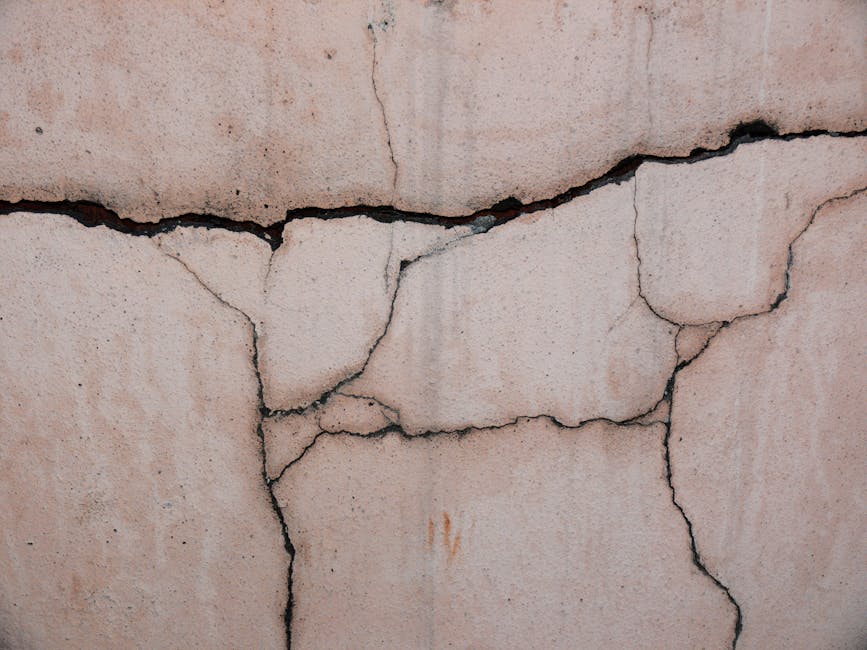
Not all cracks signal structural failure, but the ones that do are unmistakable once you know what to look for. Hairline shrinkage cracks in a concrete slab are common and typically cosmetic. Horizontal cracks in block walls, stair-step cracks that follow mortar joints, and any crack wider than a quarter inch demand immediate engineering assessment. These patterns indicate active lateral pressure or differential settlement, forces that will not stop on their own.
Interior drywall cracks tell a parallel story. If you patch a crack above a door frame and it reappears within weeks, the building is still moving. The drywall is not the problem; the foundation beneath it is. Pay attention to cracks that radiate from corners of windows and doors, especially when paired with other symptoms on this list. One crack might be a fluke. Two or three across different parts of the building form a pattern that points underground.
Uneven Floors and Slab Issues
Sloping, dipping, or bouncing floors are among the most disruptive foundation symptoms in commercial settings. In warehouses, uneven floors throw off forklift stability and racking alignment. In retail spaces, they create trip hazards that expose you to liability claims and OSHA violations. In offices, they make furniture placement awkward and signal to employees and clients that the building has problems.
The root cause is often hidden beneath the slab. Water main breaks, sewer leaks, or poor compaction during original construction can create voids up to three feet deep under what looks like solid concrete. The slab bridges these voids for a while, then begins to crack and sink. Heavy equipment and inventory loads accelerate the process. If you notice that floor drains no longer sit at the low point of a floor, or that inventory racks need constant shimming to stay level, the slab is moving and needs evaluation.

Doors Not Closing and Wall Separation
Doors that stick, scrape the floor, or refuse to latch are often the first sign anyone notices. A building settles unevenly, the frame goes slightly out of square, and suddenly a door that worked fine for years will not close without force. Facility managers sometimes plane down doors or adjust hinges, treating the symptom while the foundation continues to shift.
Wall separation is harder to ignore once it appears. Gaps between interior walls and ceilings, separation at crown molding joints, or daylight visible between exterior walls and window frames all indicate the building is twisting or racking. These are not cosmetic issues. They mean the structural connections that hold the building together are under stress they were not designed to handle. Seasonal moisture changes in the soil can make the gaps open and close, but the trend line only goes one direction: worse.
Water Pooling Near the Building and Drainage Problems
Standing water against the foundation after rain is both a cause and a symptom of foundation distress. Water saturates the soil, reducing its bearing capacity and increasing hydrostatic pressure against basement walls or slab edges. Over time, soil erodes from under footings, creating the voids that lead to settlement.
Commercial properties with large parking lots, flat roofs, or minimal landscaping are especially vulnerable. Runoff concentrates at downspouts and low points, often right next to the building. If the ground slopes toward the structure instead of away from it, the foundation is under constant assault. Drainage problems do not fix themselves, and they accelerate every other foundation issue on this list. A proper commercial foundation repair plan must address water management or the repairs will not last.
Soil Movement and Pier and Beam Concerns
Expansive clay soils, common across Georgia, Florida, and the Carolinas, shrink when dry and swell when wet. The volume change is dramatic enough to lift and drop entire building sections. Foundations in these soil conditions are in constant motion, and only deep pier systems anchored below the active soil zone can provide lasting stability.
Pier and beam foundations bring their own vulnerabilities. Wood beams rot in crawl spaces with poor ventilation. Steel connectors rust when exposed to moisture. Concrete piers sink or tilt as soil conditions change. Visible gaps between the ground and the bottom of beams mean the piers have failed and the beam is now bearing on soil it was never meant to touch. This condition requires immediate shoring before the beam itself fails.
Repair vs. Replacement: What Commercial Property Owners Need to Know
Full foundation replacement is rarely necessary and almost never the most cost-effective option. The idea of tearing out and repouring a commercial foundation is daunting enough that some property owners delay action, assuming that is what they face. In reality, modern repair methods can stabilize and lift existing foundations without demolition.
Helical piers, push piers, and slab piers are engineered to transfer building loads past unstable soil to competent bearing strata. They can be installed from the exterior or through small interior openings, preserving the building above. Repair is appropriate when the foundation concrete or masonry is structurally sound but settling due to soil issues. Replacement only becomes necessary when the foundation material itself has deteriorated: spalling concrete, corroded rebar, or masonry that has lost its structural integrity.
The decision should rest on a geotechnical engineer's report, not a contractor's estimate alone. Soil borings, elevation surveys, and crack monitoring data tell the real story. Patchwork fixes like mudjacking or surface patching, applied without addressing the underlying soil or drainage problems, typically fail within one to three years. The money spent on a quick fix is money lost, and the damage continues accumulating while you wait for the patch to fail.
Why Foundation Repair Should Involve a Broader Construction Plan
Foundation repair is not an isolated event. Treating it as one, fixing the piers but ignoring the drainage, the soil, or the structural connections above, guarantees repeat failures. A "fix and forget" approach ignores the root cause and leaves the building vulnerable to the same forces that caused the original settlement.
A comprehensive plan integrates foundation stabilization with drainage correction, soil stabilization where needed, and structural reinforcement of affected framing. Commercial properties benefit from a phased approach that coordinates foundation work with parking lot regrading, gutter and downspout upgrades, and interior flooring replacement. This sequencing minimizes business disruption and avoids the waste of fixing a floor only to have foundation work damage it later.
Avoiding patchwork fixes means investing in a solution that includes engineering oversight, permit compliance, and written warranty coverage. The goal is not just to stop the current movement but to create conditions where the foundation remains stable for decades. TekTone Builders approaches every commercial foundation repair as part of a larger building health strategy, identifying the full chain of cause and effect before the first pier goes into the ground.
What to Expect from a Professional Commercial Foundation Repair Project
The Diagnosis-First Process
Every project begins with a thorough inspection and soil analysis, not a quick walk-around and a verbal estimate. Engineers assess slab elevation across the entire footprint, map crack patterns, measure drainage flow, and evaluate soil bearing capacity through borings or probe testing. This diagnostic phase determines what is actually happening underground and what forces are driving the damage.
The diagnosis-first approach ensures you only pay for what is needed. No upsells. No guesswork. The repair plan flows directly from the data: how many piers, what type, at what depths, and in what locations. It also identifies whether drainage work, soil injection, or structural reinforcement should accompany the pier installation. You get a clear scope of work with a defined outcome: a stable, level foundation that stays that way.
Repair Methods and Timelines
Helical piers are ideal for lighter commercial structures and sites with limited access. They screw into the ground like large augers, reaching stable soil at depths determined by torque readings during installation. Push piers handle heavier loads for multi-story buildings, driven hydraulically to bedrock or competent bearing strata. Slab piers can lift and level concrete slabs without breaking them, preserving existing flooring and reducing downtime.
Most commercial foundation repair projects complete within three to ten days, depending on building size and the number of piers required. Crews trained in commercial environments work in zones or after hours to minimize disruption to your operations. The goal is a repaired foundation with your business running as close to normal as possible throughout the process.
Cost Transparency and Financing
Commercial foundation repair costs range from $10,000 to $88,000 on average, with larger or more complex projects exceeding that range. The variables include square footage affected, number and type of piers, access difficulty, and whether drainage or soil work is included. A small retail space with isolated settlement will fall on the lower end. A large warehouse with extensive void filling and dozens of piers will run higher.
Financing options are available, and many commercial property insurance policies cover foundation repair when the damage results from a covered peril such as a plumbing leak or water main break. TekTone Builders can assist with claim documentation and work with your adjuster to maximize coverage. The cost of repair should be weighed against the cost of inaction: lost property value, lost tenants, and the escalating price of a worsening problem.
Frequently Asked Questions About Commercial Foundation Repair
How much does commercial foundation repair cost? Costs vary widely based on building size and damage severity, but most commercial projects fall between $10,000 and $88,000. A detailed inspection and engineering assessment is the only way to get an accurate number for your specific building.
What causes commercial foundation settlement? Common causes include water main breaks, poor soil compaction during original construction, excessive floor loads from forklifts and heavy machinery, expansive clay soils that shrink and swell with moisture changes, and drainage failures that concentrate water at the foundation.
How long does commercial foundation repair take? Most repairs complete within three to ten days. The timeline depends on the number of piers required, access conditions, and whether drainage or soil work is included in the scope. Crews can often work in zones or after hours to keep your business operational.
Do I need an engineer for commercial foundation repair? Yes. A licensed structural engineer should always be involved to design the repair plan, specify pier types and depths, and verify code compliance. Engineering oversight protects you from undersized repairs and provides documentation for insurance claims and future property transactions.
What is the difference between helical piers and push piers? Helical piers are screwed into the ground and are best for lighter loads and limited-access sites. Push piers are driven hydraulically to bedrock or dense bearing strata and support heavier commercial structures. The choice depends on soil conditions, building weight, and access constraints.
Protect Your Commercial Property with TekTone Builders
Foundation problems do not stay small. They affect doors, walls, floors, drainage, safety, and property value. Ignoring the signs leads to red-tagged buildings, lost tenants, and diminished asset value that no sale can recover. The cost of repair only increases with time, and the window for the most cost-effective solutions narrows every month.
TekTone Builders provides a diagnosis-first approach: we identify the root cause, design a comprehensive repair plan that addresses the full chain of problems, and execute with minimal business disruption. Every project includes engineering oversight, written warranties, and a commitment to avoiding patchwork fixes that fail. Early intervention saves money, protects your investment, and keeps your building safe for the people who depend on it.
Schedule a commercial foundation concern review with TekTone Builders today.