
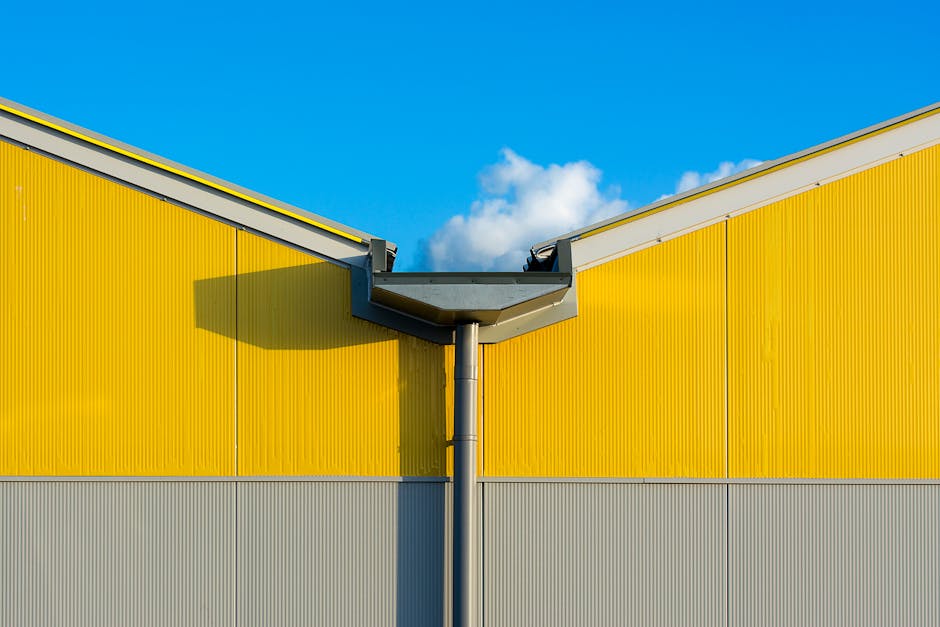
When commercial gutters and downspouts fail, the damage is rarely instant: it is silent, cumulative, and expensive. Building owners and facility managers often overlook these systems because they seem simple. A metal channel, a vertical pipe, a splash block at the bottom. But that simplicity is deceptive. On a commercial building, the roof area can span tens of thousands of square feet. A single inch of rainfall translates into thousands of gallons of water that must be collected, channeled, and discharged away from the structure. When any part of that system underperforms, water finds the path of least resistance: into the roof assembly, behind the fascia, down the interior of walls, and against the foundation. This article walks through the sizing, placement, and warning signs of commercial drainage failure so you can identify problems before they become structural liabilities. If you suspect your building's drainage is not performing as it should, a professional assessment is the cheapest insurance you will ever buy.
Table of Contents
- Why Commercial Gutters Are a Structural System, Not an Accessory
- The Hidden Damage Cycle of Poor Roof Drainage
- Commercial Gutter Sizing: Why "Bigger" Is Often Barely Enough
- When Gutter Problems Reveal Deeper Exterior Issues
- Preventive Maintenance: Protecting Your Investment Before Repairs Escalate
- Code Compliance and Professional Standards: The Missing Piece
- Conclusion: Stop Water Damage Before It Finds a Way In
Why Commercial Gutters Are a Structural System, Not an Accessory
Residential gutters handle modest roof planes. A typical home might collect water from 2,000 square feet of roof area during a storm. A commercial warehouse, retail center, or office building can easily present 20,000 to 50,000 square feet of roof surface to the sky. The water volume is measured in gallons per minute, not drips. This changes everything about how the system must be designed and maintained.
Aesthetic choices like color and profile matter, but they are secondary to hydraulic capacity and proper discharge velocity. A gutter that looks substantial from the ground can still be undersized for the rainfall intensity your region experiences. The primary job of commercial gutters and downspouts is to move water away from five critical zones: the roofline, the exterior walls, the foundation, the sidewalks, and the entry areas. When water reaches any of these zones repeatedly, damage begins. Treating gutters as a cosmetic afterthought rather than a structural system is the root cause of most commercial water damage. The sections below detail exactly how that damage unfolds and what it costs to ignore.
The Hidden Damage Cycle of Poor Roof Drainage
Water is patient. It does not need a storm to cause damage; it only needs time and access. When commercial gutters and downspouts are undersized, clogged, or poorly pitched, water begins a slow assault on the building envelope. The damage progresses through several stages, each one compounding the cost of the last.
Roof edge and fascia damage is the first and most visible sign of trouble. When gutters overflow or hold standing water, the fascia board and roof sheathing at the eaves stay wet long after the rain stops. In wood-framed buildings, this leads to rot that compromises the attachment points for the gutter system itself. In steel or masonry construction, trapped moisture accelerates corrosion of fasteners, brackets, and metal roof edge components. The fascia is the structural transition between roof and wall; weakening it invites water deeper into the building.

Wall staining and masonry deterioration follow quickly. Overflowing water cascades down exterior walls, carrying dirt, oxidized metal particles, and dissolved minerals from roofing materials. On masonry surfaces, this causes efflorescence: white, chalky deposits that signal water is moving through the wall assembly. In colder climates, the freeze-thaw cycle turns trapped moisture into a destructive force. Water enters small cracks and pores in brick, stone, or concrete, freezes and expands, and spalls the surface. Over several winters, what began as a stain becomes a structural repair.
Foundation saturation and settlement represent the most expensive phase of the damage cycle. Water that pools at the base of a commercial building exerts hydrostatic pressure against foundation walls. This pressure finds every joint, crack, and penetration. Over time, soil saturation can cause differential settlement as supporting soils shift or erode. Foundation cracks appear, doors and windows begin to stick, and the building literally moves. By this point, the repair costs have moved from hundreds of dollars for gutter cleaning to tens of thousands for foundation work.
Erosion and walkway hazards create liability exposure on top of structural costs. Uncontrolled downspout discharge erodes landscaping, washes out the subbase beneath sidewalks and parking areas, and deposits sediment where it obstructs other drainage features. In winter, poorly directed discharge creates ice sheets on walkways and entry areas. Slip-and-fall claims from tenants, customers, or employees can dwarf the cost of proper drainage installation.
Flat roof ponding deserves special attention because it is invisible from the ground. Many commercial buildings have flat or low-slope roofs with internal drains or perimeter scuppers that feed into gutters and downspouts. When downspout placement or sizing prevents complete drainage, water ponds on the roof membrane. Standing water degrades roofing materials through UV magnification, thermal stress, and biological growth. A roof designed to last 20 years can fail in 10 if ponding water is not addressed. The gutter system is often the bottleneck, not the roof itself.
Commercial Gutter Sizing: Why "Bigger" Is Often Barely Enough
Sizing commercial gutters by guesswork is a gamble that building owners lose every time. The correct approach starts with rainfall intensity data for your specific location. NOAA Atlas 14 provides precipitation frequency estimates that engineers use to determine the 100-year, one-hour storm event for any given area. This is not a theoretical exercise: it is the standard that building codes reference and that properly designed drainage systems must meet.
The gutter cross-section must handle the calculated flow rate from the contributing roof area. A roof area of 10,000 square feet in a region with a 100-year rainfall intensity of 3 inches per hour produces roughly 187 gallons per minute of runoff. That volume demands a gutter with sufficient width and depth to carry the flow without overtopping. Generic rules of thumb like "use 6-inch gutters for commercial buildings" ignore this math and invite failure.
Box gutters are the workhorse of commercial drainage. Available in widths from 5 inches to 10 inches, they offer substantially higher volume capacity than K-style or half-round profiles of the same nominal width. Box gutters also install concealed behind parapet walls or fascia, protecting them from ice damage and improving the building's appearance. For large industrial roofs, warehouses, and institutional buildings, 8-inch and 10-inch box gutters are common. These sizes often require custom fabrication and longer lead times, so planning ahead is essential.
Material gauge matters as much as profile. Commercial gutters in 24-gauge steel or .125-inch aluminum resist sagging under the weight of snow, ice, and debris. Thinner materials deflect between hangers, creating low spots where water stands and debris accumulates. In regions with heavy snow load, undersized material gauge leads to permanent deformation and system failure. The upfront savings on thinner material disappear the first time a gutter pulls away from the building under ice weight.
Downspout matching is where many otherwise adequate gutter systems fail. A 6-inch commercial gutter requires a minimum downspout size of 3 inches by 4 inches. Larger roof areas demand larger downspouts or more frequent placement. The general guideline is one downspout per 600 square feet of roof area, but this varies with rainfall intensity and gutter size. A 4-inch by 5-inch downspout handles roughly twice the flow of a 2-inch by 3-inch residential downspout. Undersized downspouts create backpressure that causes gutters to overflow even when the gutter itself is large enough. The entire system must be designed as a continuous path from roof edge to discharge point, with no bottlenecks.
Downspout Placement and Discharge Extensions
Downspout placement on commercial buildings follows a different logic than residential installations. The maximum spacing between downspouts should not exceed 50 feet, and closer spacing is often necessary for high-rainfall regions or large roof areas. Closer spacing reduces the volume of water each downspout must handle and lowers the velocity of flow entering the downspout, which minimizes splash-back at the gutter outlet.
The standard 2-inch by 3-inch downspout found on residential homes has no place on a commercial building. The minimum recommended size for commercial applications is 3 inches by 4 inches, with 4-inch by 5-inch downspouts specified for larger roofs or areas with intense rainfall. Open face downspouts, which are common in the upper Midwest, allow leaves and debris to pass through rather than clogging at the top. This design requires a larger diameter to handle the same flow volume, but it reduces maintenance frequency in buildings surrounded by trees.
Discharge is the final and most frequently neglected component of downspout design. Water exiting a downspout must be carried at least 5 to 10 feet from the foundation. Splash blocks alone are rarely adequate for commercial volumes. Underground drain lines, pop-up emitters in landscaped areas, or paved channel drains are standard solutions. The goal is to discharge water onto ground that slopes away from the building or into a storm drainage system. Every downspout elbow and offset in the vertical run creates friction loss that reduces flow velocity. Minimize turns and use long-radius elbows when changes in direction are unavoidable.
When Gutter Problems Reveal Deeper Exterior Issues
Sometimes the gutters are not the root cause. They are the messenger. When water problems persist despite a functional gutter system, the issue often lies elsewhere in the building's exterior construction. Recognizing these interconnected failures prevents money being spent on the wrong solution.
Grading failures are the most common hidden culprit. If water pools near the foundation after every rain, check the slope of the surrounding ground. Building codes require grade to fall away from the foundation at a minimum of 6 inches in the first 10 feet. Over time, soil settlement, landscaping changes, or adjacent construction can reverse this slope. Water that should flow away instead flows toward the building, overwhelming even a properly sized gutter and downspout system. Regrading is a site work project, not a gutter repair, but ignoring it guarantees ongoing water problems.
Roof-to-wall flashing gaps allow water behind the gutter system entirely. Kickout flashing at the roof-wall intersection directs water from the roof plane into the gutter. When this flashing is missing, damaged, or improperly installed, water runs behind the gutter and down the wall cavity. The gutter appears to be leaking, but the actual failure is at the flashing. Similarly, missing or deteriorated counterflashing at parapet walls lets water enter the wall assembly above the gutter line. These are roofing and cladding issues that manifest as gutter problems.
Soffit and fascia rot tell a story of chronic overflow. Peeling paint, soft wood, or rust stains under the eaves indicate that gutters have been overtopping for months or years. By the time these signs are visible from the ground, the damage beneath the surface is usually extensive. Replacing fascia and soffit materials requires removing the gutters, which adds cost to what could have been a simple maintenance intervention.
Sidewalk and pavement heaving near downspout discharge points signals erosion of the base material. Water from a concentrated downspout outlet can wash out sand and gravel subbase faster than anyone expects. Concrete settles into the void and cracks. The repair involves removing the pavement, recompacting the base, and repouring: a multi-thousand-dollar expense traced back to a missing discharge extension.
Ice dam formation links roof insulation, ventilation, and gutter performance into one destructive cycle. Heat escaping through the roof melts snow at the roof surface. The meltwater runs down to the cold roof edge, refreezes, and builds a dam. Subsequent meltwater backs up behind the dam, under shingles or membrane, and into the interior. Adequate insulation and ventilation prevent ice dams at the source, but a gutter system clogged with ice and debris guarantees that any meltwater has nowhere to go except into the building.
Preventive Maintenance: Protecting Your Investment Before Repairs Escalate
Commercial gutter systems need scheduled attention. Waiting for a problem to announce itself means the damage is already underway. A maintenance program that costs a few hundred dollars per visit prevents repairs that cost thousands.
Inspection frequency should be twice per year at minimum: late spring to check for winter damage and early fall to prepare for rain and snow season. Any storm that produces wind-driven rain or hail warrants a follow-up inspection. Flat roofs with internal gutters or parapet-wall box gutters need particular attention because debris accumulation is invisible from the ground. A camera inspection or physical walk-through is the only way to confirm these hidden gutters are clear.
Cleaning removes debris before it becomes a blockage. On flat roofs with parapet walls, leaves, gravel from the roof surface, and wind-blown debris collect in the gutter channel. If the building is near trees, cleaning frequency may need to increase to quarterly. Debris that reaches the downspout can lodge at elbows or transitions, creating a plug that causes overflow during the next heavy rain.
Seam and joint inspection catches small failures before they become large leaks. Commercial gutters are typically joined with zip screws and sealant or with soldered seams. Sealant dries out, cracks, and separates over time. Soldered joints can crack from thermal expansion and contraction. An annual check of every seam and joint, with sealant touch-up as needed, extends the system's service life significantly.
Downspout blockage testing is simple and definitive. Run a garden hose at full pressure into each downspout from the gutter level. Water should exit freely at the discharge point. Slow drainage or backup indicates a blockage that will cause overflow during a storm. Clearing the blockage immediately prevents damage that would occur during the next rainfall.
Hanger and bracket inspection identifies sagging sections before they pull away from the building. Commercial gutter hangers should be spaced no more than 36 inches on center. Look for sections that hold water after a rain, which indicates the pitch has been lost due to hanger failure. Loose or missing fasteners should be replaced promptly. In coastal or industrial environments, check for corrosion on hangers and brackets even if the gutter material itself is holding up.
Code Compliance and Professional Standards: The Missing Piece
The SERP for commercial gutters and downspouts is filled with product specifications and supplier catalogs. What is conspicuously absent is discussion of the codes and standards that govern how these systems must perform. Ignoring this dimension creates legal and financial exposure that building owners often discover too late.
SMACNA, the Sheet Metal and Air Conditioning Contractors' National Association, publishes the industry standards for architectural sheet metal including gutter sizing, material thickness, joint design, and installation methods. These standards are referenced by architects and engineers in project specifications. A gutter system installed without regard to SMACNA guidelines may fail to meet the standard of care expected in commercial construction, creating liability for the installer and the building owner.
The International Building Code requires that roof drainage systems handle the 100-year, one-hour rainfall event for the building's location. This is not optional. It is the law in every jurisdiction that has adopted the IBC, which is most of the United States. An undersized gutter system is a code violation that can surface during a property sale, an insurance claim, or a lender's due diligence review. Correcting a noncompliant system after the fact costs far more than installing it correctly the first time.
Permits and inspections apply to commercial gutter replacement in many municipalities. Unpermitted work may be discovered during a building sale or refinance, potentially delaying or derailing the transaction. More importantly, the permit and inspection process provides third-party verification that the work meets code. Skipping this step saves a small amount of time and money upfront while creating open-ended liability down the road.
Insurance implications deserve careful attention from every commercial property owner. Water damage claims are among the most frequent and expensive in commercial property insurance. Many policies exclude damage resulting from lack of maintenance, including damage traced to clogged or poorly maintained gutters. If an insurer can demonstrate that the loss was preventable through routine gutter maintenance, the claim may be denied. Documentation of regular inspections and maintenance is the owner's best defense against this exclusion.
Professional installation is not a luxury for commercial gutter systems. The materials are heavy, the work is performed at roof height, and the pitch calculations must be precise. An improper pitch of as little as an eighth of an inch over 10 feet leaves standing water in the gutter. Improperly fastened hangers pull out under snow load. Poorly sealed joints leak from day one. Manufacturer warranties typically require installation by qualified professionals. The cost of correcting a bad installation often exceeds the cost of the original work.
Conclusion: Stop Water Damage Before It Finds a Way In
Commercial gutters and downspouts are the first line of defense against a slow, relentless enemy. Water does not need to break down a door or tear open a roof. It only needs a small, persistent path, and it will find one if the drainage system gives it the chance. By the time you see stains on the wall, pooling near the foundation, or cracks in the sidewalk, the damage has been progressing for months or years. The repair costs at that stage are orders of magnitude higher than the cost of proper sizing, placement, and maintenance.
Treating gutters as a structural system rather than an accessory changes how you budget, inspect, and maintain your building. Proper sizing based on local rainfall data, correct downspout placement and discharge, and adherence to code standards are non-negotiable for commercial properties. The building you protect is not just an asset on a balance sheet. It is the space where your tenants work, your customers visit, and your business operates. Water damage disrupts all of that.
Have TekTone Builders review your exterior drainage before water causes bigger damage. Contact us for a commercial drainage assessment.
Related reading: Commercial Masonry Contractors: Wall Damage & Structural Repair.
Related reading: Commercial Foundation Repair: 7 Signs Your Building Is in Trouble.