
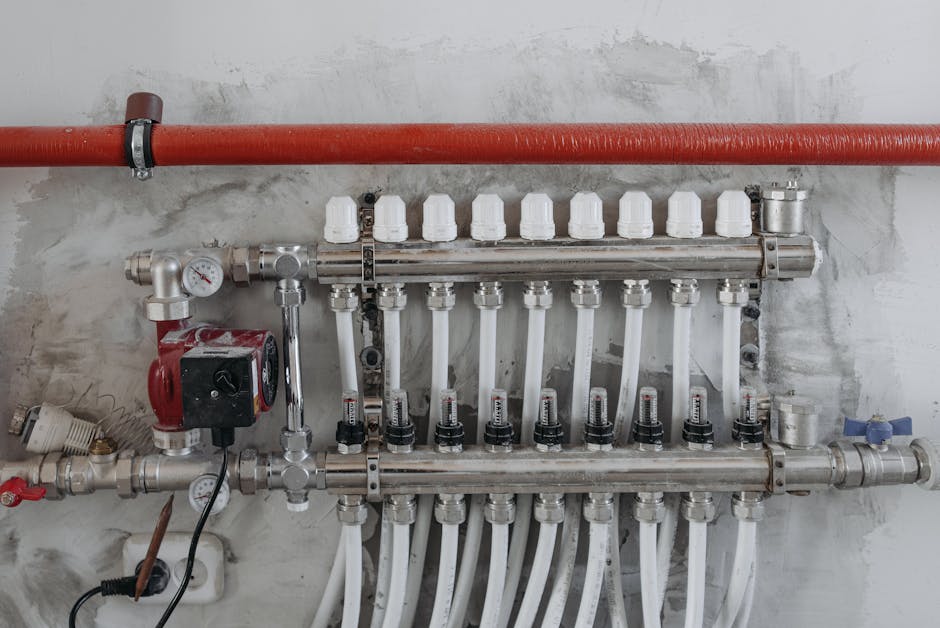
Walk through any commercial construction site at the rough-in stage and you will see the problem immediately. The ceiling plenum, that narrow cavity above the finished ceiling, is packed with ductwork, plumbing lines, sprinkler pipes, electrical conduit, and data cable trays. Every trade needs the same vertical inches. Every contractor believes their layout came first. Without a disciplined hand coordinating the mechanical scope, this space becomes a battlefield of field modifications, change orders, and inspection failures. General mechanical contractors exist to prevent exactly this scenario. They do not simply install equipment. They orchestrate the entire mechanical ecosystem so that HVAC, plumbing, piping, and ventilation systems work together from the first shop drawing to the final punch list.
Table of Contents
- What Does a General Mechanical Contractor Actually Do?
- The Hidden Cost of Uncoordinated Mechanical Trades
- Key Coordination Points for General Mechanical Contractors
- Inspection Timing and Subcontractor Scheduling
- Why a GC Needs a General Mechanical Contractor on the Pre-Construction Team
- Reducing Rework and Delay Through Mechanical Coordination
- Conclusion – Coordinate Before You Construct
What Does a General Mechanical Contractor Actually Do?
Ask ten people what a mechanical contractor handles and nine will say HVAC. That answer is incomplete in ways that cost commercial projects real money. A general mechanical contractor manages the full mechanical scope: heating, ventilation, air conditioning, plumbing, process piping, refrigeration, and increasingly building automation and electrical systems tied to mechanical equipment. The distinction matters because these systems are not independent. A chilled water pipe that blocks a return air duct is not a plumbing problem or an HVAC problem. It is a coordination failure, and it lands on the owner’s desk as a change order.
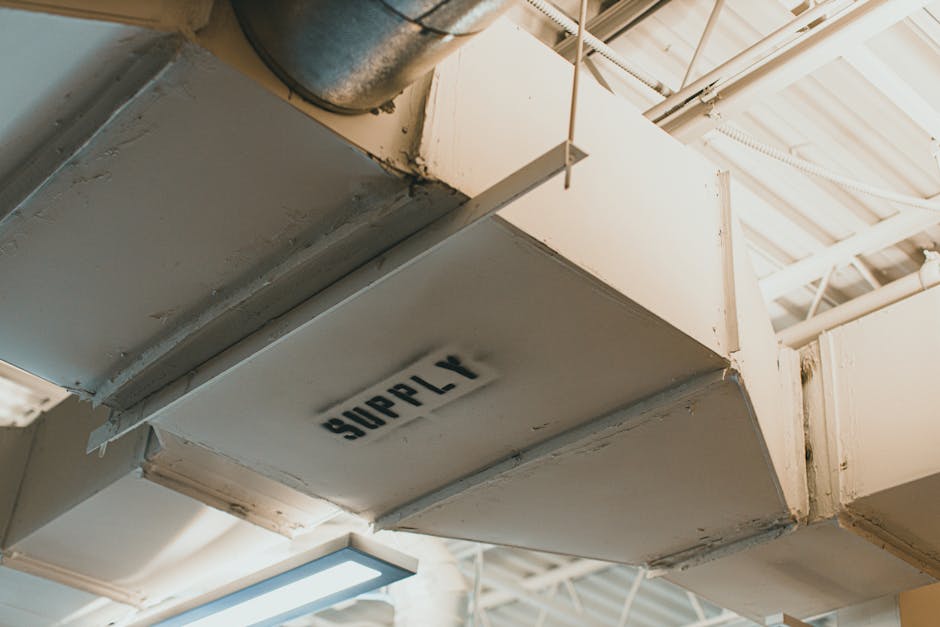
The general mechanical contractor functions as a systems integrator. They take responsibility for how mechanical components interact with each other and with the building structure. This single-point accountability eliminates the finger-pointing that happens when an HVAC sub, a plumbing sub, and a controls vendor each blame the other for a conflict. For the commercial owner or general contractor, that means one phone call instead of four. One schedule to track. One set of submittals flowing through a coordinated review process.
TekTone Builders brings this multi-trade capability to every project. With in-house expertise spanning HVAC, plumbing, piping, electrical, and building automation, the team can identify conflicts between mechanical systems before they leave the drawing board. That internal coordination is far more efficient than hoping three separate subcontractors will resolve clashes in the field.
The Hidden Cost of Uncoordinated Mechanical Trades
The costs of poor mechanical coordination rarely appear as a single line item. They accumulate across weeks of schedule slippage, stacks of revised submittals, and crews standing idle while conflicts get resolved. A duct trunk line that runs directly through the planned path of a plumbing riser is not discovered when the drawings are overlaid. It is discovered when the sheet metal crew has already hung forty feet of duct and the plumber arrives to find no route to the floor above. Something has to move. Something has to be re-fabricated. Someone pays for the delay.

Industry data consistently shows that rework accounts for five to ten percent of total construction costs on poorly coordinated projects. For a ten-million-dollar commercial building, that is half a million to a million dollars spent fixing things that should have been caught during pre-construction. Beyond the direct cost of labor and materials, there are compounding effects. Drywall cannot close until mechanical rough-in inspections pass. Ceiling grid installation stops until the plenum is cleared. Finish trades push back. The general contractor burns float days that were meant for weather or material delays, not for resolving preventable clashes.
For the commercial owner, schedule overruns translate directly to carrying costs and delayed occupancy. A medical office building that opens two months late represents two months of lost rent. A retail space that misses its seasonal opening window loses a year of peak revenue. Coordination is not an administrative exercise. It is a financial hedge against the compounding costs of field conflict.
Key Coordination Points for General Mechanical Contractors
HVAC Ductwork and Plenum Space Allocation
Ductwork consumes more plenum space than any other mechanical system. Rectangular trunk ducts, round branch runs, and insulated returns all compete for the same cross-sectional area above the ceiling. Because ductwork requires specific clearances for insulation and access to balancing dampers, it must be routed first. Other trades then fill around it. This sequencing is not negotiable if the project wants to avoid soffits that lower ceiling height or bulkheads that disrupt architectural sightlines.
Effective coordination means modeling the duct layout in three dimensions and sharing that model with the fire protection, electrical, and low-voltage contractors. Clash detection software identifies where a sprinkler main intersects a duct or where a cable tray blocks a fire damper access panel. These conflicts are resolved digitally, where changes cost nothing, rather than in the field, where they cost everything.
Plumbing and Piping Routing
Plumbing and piping systems introduce constraints that ductwork does not. Sanitary waste and vent lines must slope to drain, typically a quarter-inch per foot. That slope consumes vertical space over long horizontal runs and cannot be compromised. Domestic water lines, chilled water supply and return, and heating hot water piping all require insulation to prevent condensation and energy loss. Insulated pipes need clearance from adjacent surfaces and from each other.
Shutoff valves, balancing valves, and cleanouts must be located where maintenance personnel can actually reach them. A cleanout buried above a hard-lid ceiling with no access panel is a code violation and a future maintenance nightmare. General mechanical contractors plan these access points during coordination, not as an afterthought when the ceiling is already closed.
Equipment Placement and Access Panels
Rooftop air handlers, chillers, boilers, and pumps are heavy, powered, and connected to multiple piping and duct systems. They need structural support pads, electrical disconnects within sight, and service clearance on all sides per manufacturer specifications. A chiller squeezed too close to a wall fails inspection. A boiler room door too narrow for the equipment to pass through means cutting a new opening or disassembling the unit.
Coordination also means planning the path to get equipment into place. A rooftop unit that requires a crane pick needs the crane scheduled when the roof structure is complete but before surrounding sitework blocks access. The general mechanical contractor works with the GC to lock these milestones into the master schedule so that equipment arrives when the site is ready, not weeks before or days after.
Access panels are a small detail with outsized consequences. Every valve, damper motor, filter rack, and control sensor needs an access panel in the finished wall or ceiling. Place a chilled water valve behind a permanent millwork panel and the building engineer will curse the design every time that valve needs service. General mechanical contractors review architectural elevations and reflected ceiling plans to ensure every mechanical access point aligns with an accessible opening.
Ceiling and Wall Conflict Resolution
Mechanical systems are the primary reason commercial ceilings drop lower than architects intend. When ductwork and piping cannot fit in the plenum, the ceiling must come down. That triggers a cascade of changes: light fixtures relocate, sprinkler heads extend, partition walls adjust. The coordinated ceiling plan is the document that prevents these cascades.
Mechanical lines that penetrate fire-rated walls or shear walls need proper sleeves and firestopping assemblies. A pipe run through a shear wall without an engineered sleeve can compromise structural integrity. A duct penetration through a fire-rated partition without a fire damper fails inspection and must be corrected before the building receives its certificate of occupancy. These are not items to catch during a walkthrough. They are items to resolve during coordination, when the fix is a drawing revision rather than demolition.
Inspection Timing and Subcontractor Scheduling
Mechanical inspections follow a strict sequence. Rough-in inspections must pass before insulation is installed. Pressure tests on piping must be witnessed before walls are closed. Duct leakage tests must be completed before ceiling grid goes in. Final inspections require all systems operational and balanced. Each inspection is a gate that other trades cannot pass until the mechanical work is signed off.
The general contractor’s schedule must reflect these dependencies. Drywall hangers scheduled to start the day after rough-in, only to find the inspection has not been called or has failed, means that crew is sent home or redirected. That idle time is billable. On large projects, inspections happen in phases: floor by floor, zone by zone, or building wing by building wing. The mechanical contractor sequences work to match these phases so that one area can be closed up while another is still being roughed in.
Subcontractor scheduling requires similar precision. The sheet metal crew, pipefitters, plumbers, insulators, and controls technicians all need access to the same spaces at different times. Stacking too many crews in one area creates congestion and safety hazards. Spacing them too far apart extends the schedule. General mechanical contractors manage this choreography because they control the entire mechanical workforce, not just one trade.
Why a GC Needs a General Mechanical Contractor on the Pre-Construction Team
The most valuable contribution a general mechanical contractor makes happens before anyone breaks ground. During design review, they examine the engineer’s drawings for constructability. They identify routing conflicts, suggest alternate equipment selections that reduce installation complexity, and flag details that will generate RFIs during construction. This review catches problems when they can be solved with a phone call to the design team, not a change order during framing.
Value engineering, when done properly, is not about cheapening the project. It is about finding smarter ways to achieve the same performance. A general mechanical contractor might propose a duct routing change that eliminates three weeks of field labor without affecting airflow. They might recommend a boiler model with a smaller footprint that fits the mechanical room without requiring the architect to steal square footage from adjacent program space. These suggestions carry weight because they come from someone who will actually install the systems and live with the consequences of the design decisions.
Bringing the mechanical contractor onto the pre-construction team also streamlines communication. The GC has one mechanical point of contact for submittals, coordination drawings, and schedule updates. That single thread of communication reduces the administrative burden on the project manager and ensures that mechanical issues do not fall through the cracks between multiple subcontractors.
Reducing Rework and Delay Through Mechanical Coordination
The link between coordination and profitability is direct and measurable. Projects with comprehensive mechanical coordination close out closer to budget and closer to schedule. Projects without it generate a trail of change orders, each one eroding the contingency fund and the GC’s fee. The five to ten percent rework cost cited earlier is not a worst-case scenario. It is the industry average for projects where MEP coordination is treated as an afterthought.
A general mechanical contractor with disciplined coordination processes delivers more than just installed equipment. They deliver predictability. The GC knows that when the mechanical rough-in is scheduled to finish, it will finish. The owner knows that when the certificate of occupancy is targeted, the mechanical systems will be commissioned and ready. That reliability is worth far more than any coordination fee.
TekTone Builders structures every project around this principle. The coordination process is not a premium service layered on top of the mechanical scope. It is the foundation of how the work gets done. From initial design review through final commissioning, the focus stays on eliminating conflicts before they become problems.
Conclusion – Coordinate Before You Construct
Mechanical coordination is not a luxury for complex commercial projects. It is the difference between a building that opens on time and one that bleeds money through rework, delays, and frustrated subcontractors. The mechanical systems in a modern commercial building are too interconnected to be managed as separate scopes by separate contractors. They need a single accountable entity that owns the full mechanical picture.
A general mechanical contractor provides that ownership. They coordinate HVAC, plumbing, piping, and ventilation so that every system fits in the space allocated, passes inspection on schedule, and performs as designed. The cost of this coordination is a fraction of the cost of resolving conflicts after they are built.
Bring TekTone Builders in to coordinate the construction plan before mechanical work creates conflicts. Contact our team for a pre-construction coordination review on your upcoming project and start construction with a mechanical plan that is built to avoid problems, not react to them.
Related reading: Commercial Plumbing Contractors: Why Coordination Saves Buildouts.