Most project owners and general contractors make the same mistake when a renovation or tenant improvement lands on their desk. They look at the demolition scope and see a simple task: knock things down, haul them away, and clear the space. It gets priced like labor, scheduled like cleanup, and handed to the lowest bidder. That thinking is expensive. It is also dangerous. The demolition phase is not a pre-construction afterthought. It is the first construction decision that either protects the entire project or creates problems that compound through every phase that follows. Professional commercial demolition contractors approach tear-out work with the same structural discipline, engineering oversight, and safety protocols that govern new construction. This article explains why that matters, what is actually at stake, and how a real demolition plan prevents the kind of damage that stops a job site cold.
Table of Contents
- The High Cost of Treating Demolition Like Simple Tear-Out Work
- Interior Demolition vs. Selective Demolition: Knowing the Difference
- The Critical Role of Structural Awareness in Commercial Demolition
- Protecting Utilities and Reusable Areas During Demolition
- Dust Control and Debris Removal: The Hidden Logistics
- Permit Concerns and Regulatory Compliance in 2026
- Preparing for the Next Phase: Why Demolition Sets the Stage for Construction
- Frequently Asked Questions About Commercial Demolition
- Conclusion: Don't Let the First Decision Be the Costly One
The High Cost of Treating Demolition Like Simple Tear-Out Work
There is a persistent assumption in commercial construction that demolition is the easy part. The building is coming apart, not going together. How complicated can it be? The answer, as any experienced contractor knows, is very. Unplanned demolition creates structural instability that may not be visible until a floor sags or a crack propagates across a load-bearing wall. It severs utilities that were never properly located or isolated. It floods adjacent tenant spaces with silica dust, triggering complaints, shutdowns, and OSHA citations. It delays every trade scheduled to follow.

The difference between a project that stays on track and one that spirals into change orders and emergency repairs often traces back to the first week on site. Established commercial demolition contractors in the Mid-South market, firms with decades of continuous operation, have built their reputations on one truth: the risks are real, and they compound fast when the demolition crew treats the work as brute force instead of engineered deconstruction. If the demolition is not planned with the same rigor as the build that follows, the rest of the project is already compromised before the first stud goes up.
Interior Demolition vs. Selective Demolition: Knowing the Difference
Not all commercial demolition is the same. Two terms get used interchangeably on bid documents, but they describe fundamentally different scopes of work. Confusing them leads to wrong assumptions, wrong pricing, and wrong execution.
What Is Interior Demolition?
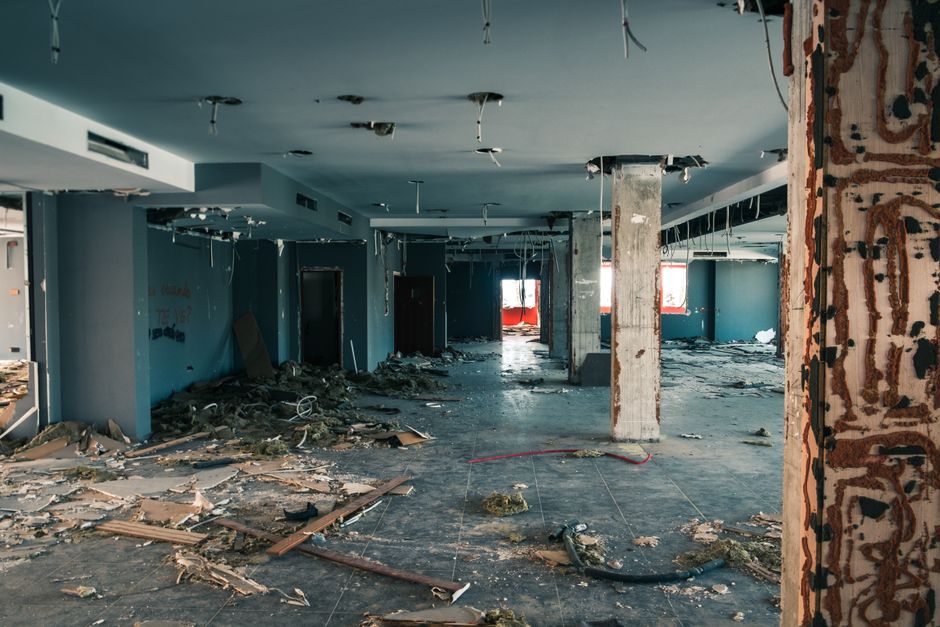
Interior demolition focuses on stripping the inside of a commercial structure while leaving the building envelope intact. This is the typical scope for office renovations, retail build-outs, and tenant improvements. Walls come down, flooring gets removed, ceilings are dropped, and mechanical systems are disconnected. The exterior shell, the roof, and the structural frame remain untouched.

The challenge with interior demolition is containment. These projects often happen in occupied buildings where other tenants are conducting business on the other side of a temporary partition. Dust control is not optional. Silica particulates from drywall and concrete grinding must be captured at the source using negative air pressure, HEPA filtration, and wet cutting methods. Debris removal paths must be planned so that hauling does not track dust through finished lobbies or active corridors. A professional crew treats the occupied building like a surgical environment, not a demolition site.
What Is Selective Demolition?
Selective demolition is a precision process. Specific structural elements are removed while adjacent components are preserved and often reinforced. This is the method used in historic renovations, adaptive reuse projects, and partial building repurposing where only a section of the structure is being reconfigured.
Selective demolition demands a working knowledge of load paths. Removing a section of floor decking or cutting through a beam changes how weight transfers through the building. Without an engineer reviewing the existing conditions and specifying the sequence of removal, the crew is working blind. A misstep in selective demolition does not just damage what was supposed to stay. It can trigger a progressive collapse. That is why serious commercial demolition contractors keep structural engineers on staff or on retainer, and why every cut is planned before it is made.
The Critical Role of Structural Awareness in Commercial Demolition
Demolition is not about what gets removed. It is about what remains after the removal is complete. That distinction separates trained commercial demolition contractors from general labor crews with sledgehammers and dumpsters.
Every commercial building has a load path. Walls, columns, beams, and connections work together to transfer weight to the foundation. When demolition removes one element from that system, the load must find a new path. If the contractor does not know which walls are load-bearing, which beams are under tension, or which connections are holding lateral forces in check, the removal becomes a gamble. Sometimes the building gives a warning. Sometimes it does not.
Safety-first demolition protocols require blueprint review before any physical work begins. The crew needs to know the structural system, identify stress points, and plan the sequence of removal so that stability is maintained at every step. During selective demolition, temporary bracing and shoring are often required. Monitoring is continuous. If a saw cut reveals unexpected conditions, the plan adjusts. Ignoring structural awareness is the fastest way to turn a renovation into a full-scale rebuild, and it puts every worker on site at risk.
Protecting Utilities and Reusable Areas During Demolition
One of the most common and most preventable failures on commercial demolition sites is damage to existing utilities. A gas line gets nicked because no one called for a locate. A water line gets severed because the shut-off valve was buried behind a wall no one checked. An electrical conduit feeding an active tenant space gets pulled loose because the demolition crew did not know it was live.
These are not rare occurrences. They happen routinely when demolition is treated as simple tear-out work. Proper planning includes comprehensive utility locates before any tool touches the building. It includes shut-off procedures coordinated with the building owner and utility providers. It includes temporary rerouting or capping of lines that must remain active for other parts of the building.
Avoiding damage to reusable areas requires the same level of discipline. Finished lobbies, adjacent tenant spaces, and recently renovated corridors represent sunk costs that the owner does not want to spend again. Protecting them means erecting proper containment barriers, controlling vibration, managing dust migration, and routing debris removal away from finished surfaces. This is where the value of professional commercial demolition contractors becomes obvious. They protect what stays while removing what goes.
Dust Control and Debris Removal: The Hidden Logistics
Why Dust Control Is Non-Negotiable
Commercial demolition generates airborne particulates that are not just a nuisance. They are a regulated health hazard. Respirable crystalline silica, released when concrete, brick, or drywall is cut or ground, can cause silicosis, lung cancer, and other respiratory diseases. OSHA standards for silica exposure are strict, and enforcement has only intensified.
Compliant dust control requires engineering controls at the source. Wet cutting methods suppress dust before it becomes airborne. HEPA-equipped negative air machines create pressure differentials that keep contaminated air from migrating out of the work area. Personal protective equipment is the last line of defense, not the first. A job site that relies on respirators alone to manage silica exposure is already out of compliance. Poor dust control can trigger an OSHA inspection, a stop-work order, and fines that erase the project budget. It can also generate lawsuits from building occupants who develop respiratory issues. There is no shortcut here.
Debris Removal and Recycling
Debris removal looks simple from a distance. A dumpster shows up. It gets filled. It gets hauled away. The reality on a commercial site is more complicated. Demolition debris is heavy, bulky, and mixed. Concrete, steel, wood, drywall, insulation, and wiring all come out together. Sorting that material on site takes time and space. Not sorting it means paying higher disposal fees and missing opportunities for recovery.
Leading commercial demolition contractors have invested in asset recovery and recycling programs. Metals get separated for scrap value. Concrete gets crushed for aggregate. Clean wood gets chipped or repurposed. The goal is landfill diversion, which reduces disposal costs and supports sustainability targets that many commercial clients now require. Efficient debris removal also keeps the site clear for the trades that follow. A demolition crew that leaves piles of rubble for the next contractor to deal with has not finished the job.
Permit Concerns and Regulatory Compliance in 2026
Permitting is the part of commercial demolition that most project owners never see, and that is exactly how it should work when the contractor handles it correctly. The reality in 2026 is that city regulations around demolition permits have tightened. Municipalities across the Mid-South, including Memphis, have added requirements for pre-demolition surveys, hazardous material assessments, dust control plans, and neighbor notifications. The days of pulling a simple permit and starting work the next morning are over.
A serious commercial demolition contractor manages the entire permitting process. That includes filing applications, submitting engineering documentation, scheduling inspections, and coordinating with local authorities on traffic control or right-of-way permits if needed. It also includes compliance with EPA regulations for asbestos and lead, which require certified abatement before demolition can proceed on older structures. Failure to secure proper permits does not just delay the project. It exposes the owner to stop-work orders, fines, and legal liability that can follow the property long after the work is done. TekTone Builders navigates the red tape so the client does not have to, and that is the standard every commercial client should demand.
Preparing for the Next Phase: Why Demolition Sets the Stage for Construction
The end of demolition is not the finish line. It is the starting line for everything that comes next. A clean, level, and structurally sound site allows concrete pours to proceed on schedule. It gives steel erectors a safe and predictable work area. It lets MEP rough-ins begin without working around debris or dodging unstable overhead conditions.
Commercial demolition contractors who coordinate with the general contractor during the planning phase create efficiencies that compound through the entire project. The demolition sequence can be scheduled to release portions of the building to other trades as soon as they are ready, rather than waiting for the entire scope to finish. Inspections can be timed so that the site transitions from demolition to construction without a gap. Utility disconnections and reconnections can be phased to minimize downtime.
When demolition is treated as part of the full build, rather than a separate pre-construction chore, the project moves faster and costs less. That coordination does not happen by accident. It requires a demolition contractor who understands construction sequencing and communicates with the entire project team.
Frequently Asked Questions About Commercial Demolition
How much does commercial demolition cost in Memphis?
Costs vary significantly based on square footage, material types, structural complexity, and whether hazardous material abatement is required. There is no fixed per-square-foot price that applies across all projects. A small interior demolition in a single-story office suite will cost far less than a full structural teardown of a multi-story industrial building with asbestos-containing materials. Reputable commercial demolition contractors provide transparent, project-specific quotes based on a site assessment, not a phone estimate.
Do I need a permit for demolition in Memphis?
Yes. The City of Memphis requires demolition permits for commercial projects, and the requirements have expanded in recent years. The process typically includes a pre-demolition inspection, documentation of utility disconnections, and proof of hazardous material abatement if applicable. A professional contractor handles all permit filings and coordinates with the building department throughout the project.
How long does a commercial demolition take?
The timeline depends entirely on scope. A straightforward interior demolition for a retail space might take three to five days. A selective demolition in an occupied building could run two to three weeks. A full structural demolition of a large commercial building typically spans several weeks, including abatement, utility work, and site clearing. The contractor should provide a detailed schedule during the bid phase.
What is the difference between interior demolition and selective demolition?
Interior demolition removes non-structural elements inside a building while leaving the shell intact. Selective demolition removes specific structural components while preserving others, requiring engineering oversight and careful sequencing to maintain stability. Both require dust control and debris management, but selective demolition carries higher structural risk and demands more planning.
Is asbestos removal included in demolition services?
Yes, hazardous material abatement is a core component of commercial demolition on older buildings. Asbestos, lead paint, and other regulated materials must be identified through a pre-demolition survey and removed by certified professionals before general demolition can proceed. This is not an optional add-on. It is a legal requirement under EPA and OSHA regulations.
Conclusion: Don’t Let the First Decision Be the Costly One
Demolition is the first construction decision on any renovation, tenant improvement, or adaptive reuse project. It sets the tone for safety, schedule, and budget. When it is treated as simple tear-out work, the consequences show up in structural damage, utility failures, dust complaints, permit violations, and delays that ripple through every trade that follows. When it is planned and executed by professional commercial demolition contractors, the site transitions cleanly into the build phase with no surprises and no excuses.
TekTone Builders approaches demolition as an engineered phase of construction, not a prelude to it. Safety comes first. Planning comes second. Everything else follows from there. If you have a commercial project on the horizon, get demolition planned as part of the full build. Contact TekTone Builders and start the conversation before the first wall comes down.