When a general contractor or developer hires commercial drywall contractors, the decision reaches far beyond who hangs the board. The walls inside a commercial building carry fire ratings that protect occupants, sound barriers that define how spaces function, and structural tolerances that determine whether the next inspection passes or fails. A wall that looks flat after paint can still hide framing errors, skipped fire caulking, or rushed taping that will telegraph through the finish within six months. The right contractor protects the project before those problems take root. Bring TekTone Builders in before the walls go up.
Table of Contents
- Why Commercial Drywall Is a Structural System, Not Just a Finish
- Core Services That Define a Top-Tier Commercial Drywall Contractor
- The TekTone Builders Approach: Quality That Protects Your Project
- Commercial vs. Residential Drywall: What GCs Need to Know
- Frequently Asked Questions About Commercial Drywall Contractors
- Conclusion: Don’t Let Walls Become a Weak Point
Why Commercial Drywall Is a Structural System, Not Just a Finish
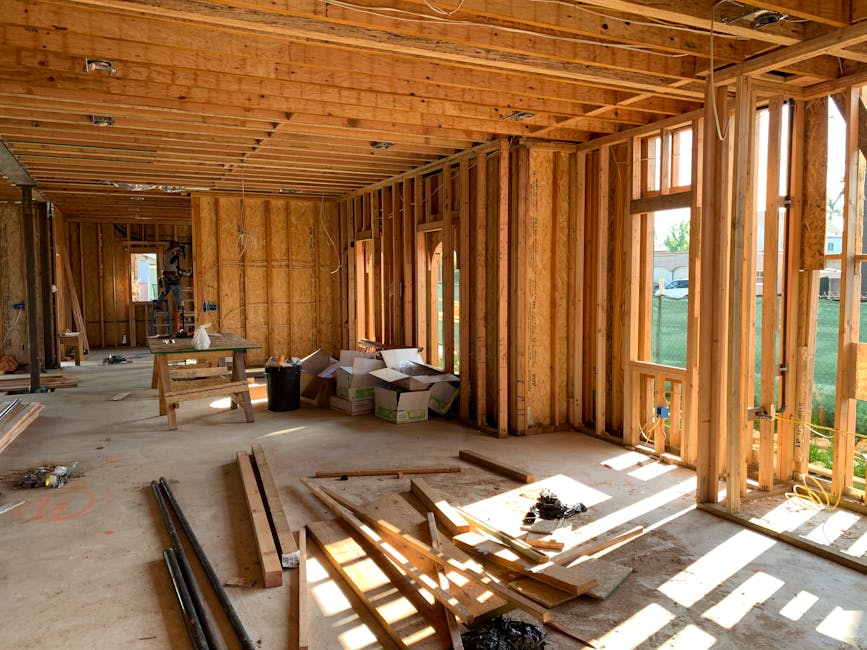
Commercial drywall functions as part of the building’s life-safety and mechanical infrastructure. A 1-hour or 2-hour fire-rated wall assembly does not earn its rating from the gypsum board alone. It depends on the full system: the gauge and spacing of the metal studs, the type and number of drywall layers, the fastener pattern, and the fire caulking at every penetration and joint. If any element falls short, the assembly fails its UL or ASTM listing, and the inspector will flag it.
Compare this to residential work, where a crew might hang half-inch board on wood studs with standard screws and call it done. Commercial tolerances are tighter. Steel studs must be cut and installed to maintain corridor widths and door clearances. MEP rough-ins must land exactly where the reflected ceiling plan and partition drawings specify. A wall that drifts two inches off layout in a house creates a cosmetic headache. In a commercial tenant buildout, that same drift can violate ADA clearances or block a sprinkler head’s coverage pattern.
The contractor’s skill in metal framing and fire-rated assemblies sets the ceiling for what the finish can achieve. No paint grade or skim coat can rescue a wall that transmits sound between offices or fails a fire inspection because the shaft wall was built without the required liner panel.
The Hidden Cost of Cheap Drywall Work
Low-bid drywall work rarely stays cheap. Nail pops, visible seams, and shadowing across a long corridor wall make the entire tenant buildout look underbuilt. Property managers notice. Tenants complain. The GC’s reputation takes a hit that no punch list can fully erase.
Schedule damage runs deeper. When drywall crews do not coordinate with electrical and plumbing rough-ins, the project stalls. Walls get closed before inspections, forcing tear-out and rework. Every day of rework pushes back the finish schedule: paint, flooring, trim, and final MEP trim-out all wait on drywall completion. A three-day framing delay can cascade into a two-week slip at project close.
Failed inspections carry hard financial costs. Re-inspection fees add up. Extended general conditions on the GC’s budget erode margin. And if the fire marshal requires a partial tear-out to verify firestopping behind a finished wall, the cost multiplies fast. Good commercial drywall contractors prevent these chain reactions by building walls that pass the first time.
Core Services That Define a Top-Tier Commercial Drywall Contractor
The scope of commercial drywall work extends well beyond hanging and taping. A full-service contractor brings capabilities that align with the project’s structural, acoustic, and moisture-management requirements from day one.
Metal framing and partition layout form the backbone of the work. Commercial partitions use 20-gauge to 25-gauge steel studs in load-bearing and non-load-bearing configurations. Load-bearing studs carry floor and roof loads above, so stud size, gauge, and bracing must match the structural engineer’s schedule. Non-load-bearing interior partitions still need precise layout to hold door frames, casework, and wall-mounted fixtures without deflection. A contractor who rushes layout creates problems that compound through every trade that follows.
Fire-rated assemblies demand strict adherence to tested designs. Type X drywall contains glass fibers that reinforce the gypsum core against heat, while Type C adds shrinkage-resistant properties for higher fire ratings. Shaft walls around elevators and stairwell enclosures require specialized liner panels and friction-fit installation that many crews never learn. The contractor must know which UL design applies to each condition and build it exactly as tested.
Sound control and acoustics matter in every commercial project, not just theaters and recording studios. Open-plan offices need partitions with STC ratings of 45 or higher to keep conversations private. Conference rooms adjacent to break areas may require STC 50 or better, achieved through staggered studs, resilient channels, and multiple layers of drywall. Acoustic ceilings and sound-absorbing panels add another layer of control that a knowledgeable contractor can integrate into the wall assembly design.

Moisture-resistant drywall protects restrooms, kitchens, janitor closets, and below-grade spaces. Greenboard and purple board products resist mold and moisture absorption better than standard gypsum, but they must be paired with appropriate primers and finishes to perform. A contractor who specifies the wrong board in a high-humidity mechanical room sets up a maintenance problem that will surface years later.
Tenant Buildouts and Office Partitions
Tenant improvements demand speed without sacrificing quality. The space is often inside an occupied building, so dust control, noise management, and after-hours work become part of the plan. Office partitions must go up fast and finish clean, with tight seams and square corners that hold up under the critical lighting common in modern commercial interiors.
Schedule coordination with HVAC, electrical, and plumbing rough-ins determines whether the buildout stays on track. In-slab plumbing must be complete and tested. Electrical boxes must be set at the correct height and aligned with the partition layout. Ductwork must be hung and diffuser openings coordinated with the ceiling grid. A drywall contractor who shows up before these trades finish creates conflicts. One who communicates early and sequences work in phases keeps the job moving.
Finish levels matter here. Level 4 finish, the standard for flat or low-sheen paint under normal lighting, works for most commercial spaces. Level 5 finish adds a thin skim coat across the entire surface, eliminating texture differences that show through gloss paint or under wall-wash lighting. Lobbies, boardrooms, and spaces with large windows or accent lighting often require Level 5. The contractor should know when to spec it and how to execute it without adding unnecessary cost where Level 4 will do.
The TekTone Builders Approach: Quality That Protects Your Project
TekTone Builders treats commercial drywall as a system that protects the project’s schedule, safety ratings, and long-term performance. Our process starts before the first stud is cut.
Pre-construction collaboration sets the stage. We review the MEP schedule and shop drawings to identify conflicts before they become field problems. Where ductwork crosses a fire-rated partition, we confirm the fire damper and access requirements. Where electrical boxes crowd a narrow stud bay, we flag the conflict so the electrician can adjust before we frame. This upfront coordination reduces cutouts, patches, and weak spots that compromise fire and sound ratings.
Material selection guidance helps clients meet code without overspending. Not every partition needs a 2-hour rating. Not every office wall needs an STC of 55. We help project teams match assemblies to actual requirements, specifying the right stud gauge, drywall type, insulation, and sealant for each condition. The result is a wall package that passes inspection and fits the budget.
Inspection readiness is built into our workflow. Our crews understand what inspectors look for: screw spacing at edges and in the field, proper gaps at floor and head-of-wall joints, fire caulking at every penetration, and the correct fastener pattern for the rated assembly. We build to pass the first inspection because we know that callbacks cost everyone time and money.
Safety and credentials back up our work. We maintain a low Experience Modification Rate, reflecting a consistent record of jobsite safety that protects our people and the GC’s liability profile. Proper licensing, insurance, and ongoing training keep our crews current on code changes and best practices.
Why Schedule Coordination Matters
Drywall cannot go up until the work inside the wall is complete and inspected. Electrical boxes must be set, wiring pulled, and rough-in inspections passed. Plumbing lines must be pressure-tested. HVAC ducts must be hung and sealed. If drywall closes the wall before these steps happen, the only fix is cut-and-patch work that weakens fire ratings and creates visible repair spots.
TekTone Builders uses a phased approach. We frame sections where rough-ins are complete while other areas wait for MEP sign-off. This keeps the project moving without risking rework. When the schedule shifts, we communicate early and adjust our sequence to match.
Commercial vs. Residential Drywall: What GCs Need to Know
The differences between commercial and residential drywall run deeper than many project stakeholders realize. Understanding them helps GCs and developers make informed decisions when selecting a contractor.
Thickness and fire code drive the first major distinction. Commercial building codes typically require 5/8-inch Type X drywall on fire-rated partitions, while residential construction uses 1/2-inch standard board for most walls. The thicker board adds weight, changes fastener requirements, and demands more from the framing system. A crew accustomed to residential work may not have the equipment or experience to handle 5/8-inch board efficiently on a large commercial floor plate.
Framing materials differ entirely. Commercial partitions use cold-formed steel studs, typically 20 to 25 gauge, cut with shears or chop saws. Residential framing uses dimensional lumber. Steel studs require different fastening techniques, different cutting tools, and different approaches to door and window rough openings. A contractor who frames only with wood will face a steep learning curve on a steel-framed commercial project.
Finish levels follow different standards. Residential drywall is typically finished to Level 3, which means tape is embedded and one coat of compound is applied. Commercial specifications usually call for Level 4, adding a second coat of compound and sanding to a smooth surface. Spaces with gloss paint or critical lighting require Level 5, which adds a full skim coat. Each level adds labor and drying time, and the contractor must factor both into the schedule and estimate.
Cost factors reflect these differences. Commercial drywall installation typically runs higher per square foot than residential, driven by thicker materials, steel framing, stricter finish requirements, and the labor to meet commercial quality standards. Regional pricing varies, but GCs should expect the installed cost to reflect the complexity and code requirements of the project, not residential benchmarks.
Frequently Asked Questions About Commercial Drywall Contractors
How much does commercial drywall cost per square foot?
Installed costs for commercial drywall typically range from $8 to $15 per square foot, depending on the finish level, fire rating requirements, framing complexity, and regional labor rates. A basic Level 4 finish on non-rated partitions falls toward the lower end. Level 5 finishes, multi-layer fire assemblies, and complex ceiling work push toward the higher end. Every project needs a detailed takeoff for accurate pricing.
How long does a commercial drywall installation take?
A 10,000-square-foot office buildout typically requires three to five weeks for framing, hanging, and finishing, assuming standard 9-foot ceilings and a Level 4 finish. Larger or more complex projects, high-rise work, or spaces requiring extensive fire-rated shaft walls will extend the timeline. Phased scheduling can overlap drywall work with MEP rough-ins to compress the overall schedule.
What is the difference between a Level 4 and Level 5 finish?
Level 4 finish includes taped joints, corner bead, and two coats of joint compound, sanded smooth. It is the standard for flat or low-sheen paint under normal lighting conditions. Level 5 finish adds a thin skim coat of compound across the entire drywall surface, eliminating texture differences between the paper face and the joint compound. Level 5 is specified for gloss or semi-gloss paint, spaces with wall-wash lighting, or areas where critical side-lighting would highlight imperfections.
Do commercial drywall contractors handle metal framing?
Yes. Most full-service commercial drywall contractors self-perform metal stud framing as part of their scope. The framing and the drywall are part of the same wall assembly, and keeping both under one contractor improves layout accuracy, schedule coordination, and accountability for the finished product.
Conclusion: Don’t Let Walls Become a Weak Point
Commercial drywall protects more than the interior finish. It safeguards fire ratings that keep occupants safe, sound control that makes spaces functional, and the schedule that keeps the project profitable. When walls fail, the signs show up in punch lists, inspection reports, and tenant complaints. When walls are built right, nobody notices them, and that is exactly the point.
Bring TekTone Builders in before the walls go up. Contact us for a pre-construction consultation or a project estimate, and let us show you what good wall work should protect.