A bad foundation is not a cracked driveway you can ignore for a season. It is a structural failure waiting to announce itself through sticking doors, drywall cracks that spread like spiderwebs, and repair bills that can erase a decade of home equity. When searching for concrete foundation contractors in Tulsa, the lowest bid often hides the highest risk. Saving two or three thousand dollars today can turn into a twenty-thousand-dollar underpinning job inside of five years. That is not speculation. It is the documented reality of building on Oklahoma soil.
Table of Contents
- Slab vs. Pier Foundations: Which Is Right for Your Tulsa Property?
- The Non-Negotiables: Concrete Strength, Thickness, and Reinforcement
- Foundation Prep: The Hidden Battle Against Tulsa Soil
- 5 Signs a Concrete Foundation Contractor Is Cutting Corners
- 7 Critical Questions To Ask Before Hiring Concrete Foundation Contractors
- Foundation Mistakes That Cost You More Later
- The Foundation Is a 50-Year Decision
Tulsa sits on expansive clay, the kind of soil that swells when wet and shrinks when dry. This movement does not just test a foundation. It punishes any weakness in the concrete, the reinforcement, or the preparation underneath. A contractor who understands this will build accordingly. A contractor who ignores it will leave you with a slab that sinks, cracks, and drains your savings. This article gives you the exact criteria to separate the two. Before you sign a contract, read this guide, then schedule a project review with TekTone Builders.
Slab vs. Pier Foundations: Which Is Right for Your Tulsa Property?
The first decision a foundation contractor should help you make is structural, not cosmetic. In Tulsa, the choice between a slab-on-grade foundation and a pier-and-beam system carries consequences that last the life of the building. The wrong choice, made to save money or speed up a schedule, creates problems that compound with every rainstorm and every dry August.
Slab-on-Grade Foundations: The Tulsa Standard With a Catch
Slab foundations are common in Tulsa because they are faster to pour and less expensive upfront. A monolithic slab sits directly on the ground, spreading the weight of the structure across a wide footprint. On a perfectly stable lot with well-drained, non-expansive soil, this works. Tulsa rarely offers those conditions.
The vulnerability of a slab is straightforward. When the clay beneath it swells after heavy rain, the slab lifts unevenly. When the clay dries and contracts during a drought, sections of the slab lose support. The result is differential settlement, where one corner of the house moves and the other does not. Slab repairs are invasive and expensive because the concrete is the floor. Plumbing, which runs beneath the slab, becomes a secondary casualty when movement cracks a pipe.
A slab can work in Tulsa, but only with aggressive soil preparation, proper reinforcement, and a thickness that exceeds minimum code. If a contractor proposes a slab without discussing soil testing first, walk away.
Pier and Beam Foundations: The Stability Solution
A pier-and-beam foundation elevates the structure above the soil on concrete piers that extend deep enough to reach stable strata. Beams span between the piers, and the floor system sits on top. This creates a crawlspace that separates the building from the moving ground.
For Tulsa's clay soil, this separation is valuable. Soil can swell and shrink without directly lifting the structure. The crawlspace provides access to plumbing, electrical, and ductwork, making repairs simpler and less destructive. If settlement does occur, individual piers can be adjusted or supplemented without tearing out a slab.
The trade-off is cost. Pier-and-beam systems require more excavation, more concrete, and more labor. The upfront investment runs higher than a slab. But in a market where soil movement is guaranteed, that investment buys peace of mind. Many older Tulsa homes built on slabs are now undergoing pier underpinning retrofits because decades of soil movement have caught up with them. Starting with piers avoids that future expense entirely.
The deciding factor is soil testing. A reputable concrete foundation contractor will never guess which system suits your property. They will order a geotechnical report, evaluate the clay content and moisture patterns, and make a recommendation backed by data. If the contractor skips this step, they are not building a foundation. They are placing a bet with your money.
The Non-Negotiables: Concrete Strength, Thickness, and Reinforcement
Concrete looks solid by default, but its strength depends entirely on what goes into the mix and how it is reinforced. Three factors determine whether a foundation holds or fails: the PSI rating of the concrete, the type and placement of reinforcement, and the thickness of the pour. A contractor who is vague about any of these is hiding something.
Why PSI Matters
PSI, or pounds per square inch, measures the compressive strength of cured concrete. The minimum standard for residential foundation concrete is 3,000 PSI. For Tulsa's expansive clay, that minimum is not enough. The constant pressure from soil movement demands a mix rated at 3,500 to 4,000 PSI. This higher strength resists the cracking forces that come from uneven ground pressure.
Ask any contractor you interview what PSI mix they use. If they cannot answer immediately, they are either ordering whatever the batch plant sends or they do not understand the engineering requirements of their own trade. Neither answer is acceptable. The mix design should be specified in the contract, and the delivery tickets from the concrete supplier should confirm it on pour day.
Rebar vs. Wire Mesh: It Is Not the Same
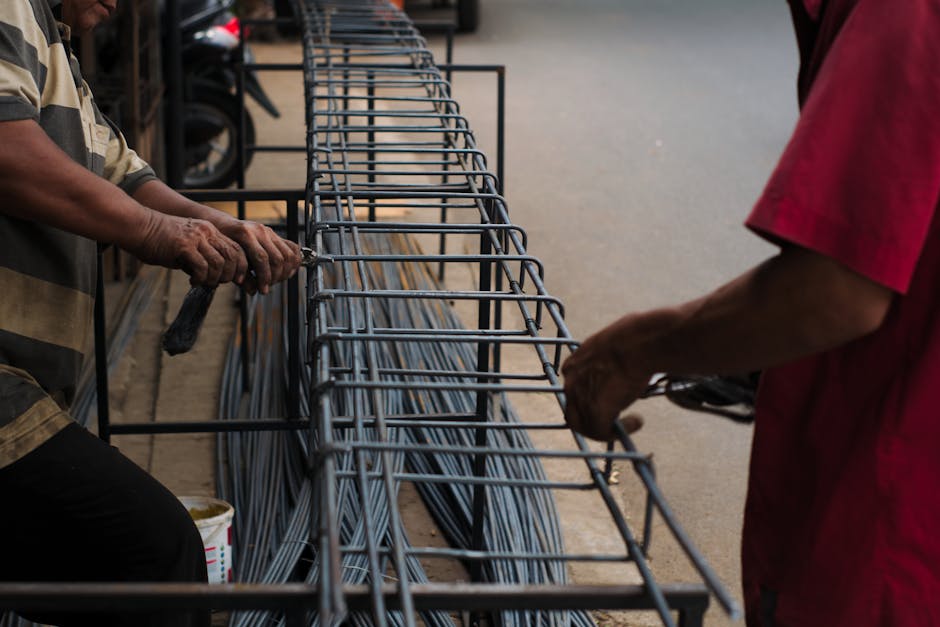
Wire mesh and rebar serve different purposes, and confusing them leads to underbuilt foundations. Wire mesh, typically a grid of thin welded wire, helps control shrinkage cracks as concrete cures. It does not provide structural reinforcement. Rebar, steel reinforcing bars typically sized at number four or number five, gives concrete the tensile strength it lacks on its own.
A foundation needs rebar. The spacing depends on the load and the soil conditions, but a typical residential foundation uses number four rebar spaced 12 to 18 inches on center in both directions. The placement is just as critical as the material. Rebar must sit in the middle third of the slab thickness, held there by plastic or concrete chairs. When a crew steps on the rebar during the pour and pushes it to the bottom of the form, the steel ends up in the wrong position. The slab looks the same when finished, but it has lost most of its structural capacity. This is a common corner-cutting move because it saves the labor of tying and chairing the steel properly.
The 4-Inch Myth
Driveways are poured at four inches. Foundations are not. A residential foundation slab should be a minimum of six inches thick, and eight inches is standard for poor soil conditions or structures with heavy loads. The extra thickness provides mass to resist soil movement and creates space for proper rebar placement.
During the pour, the contractor should verify thickness with probes or depth stakes. If the crew cannot show you how they are checking, you have no way to know whether you got six inches or four. The difference is invisible once the forms are stripped, but it shows up in performance over the next decade.
Foundation Prep: The Hidden Battle Against Tulsa Soil
The concrete that sits above ground is only half the story. What happens below the slab determines whether the foundation stays level or begins to fail within the first year. Site preparation, grading, drainage, and compaction are the invisible work that separates professional concrete foundation contractors from crews that pour and pray.
Grading and Drainage
Water is the enemy of Oklahoma foundations. The ground around a foundation must slope away from the concrete, dropping a minimum of six inches over the first ten feet. This prevents rainwater from pooling against the slab edge and saturating the soil directly beneath the structure.
Downspout drainage is part of the same system. Roof runoff cannot be allowed to dump next to the foundation. It must be collected and piped away, either to a storm drain or to a discharge point well downhill from the structure. A contractor who does not address drainage as part of the foundation scope is leaving the most destructive force in Tulsa construction entirely unmanaged.
Compaction Is King
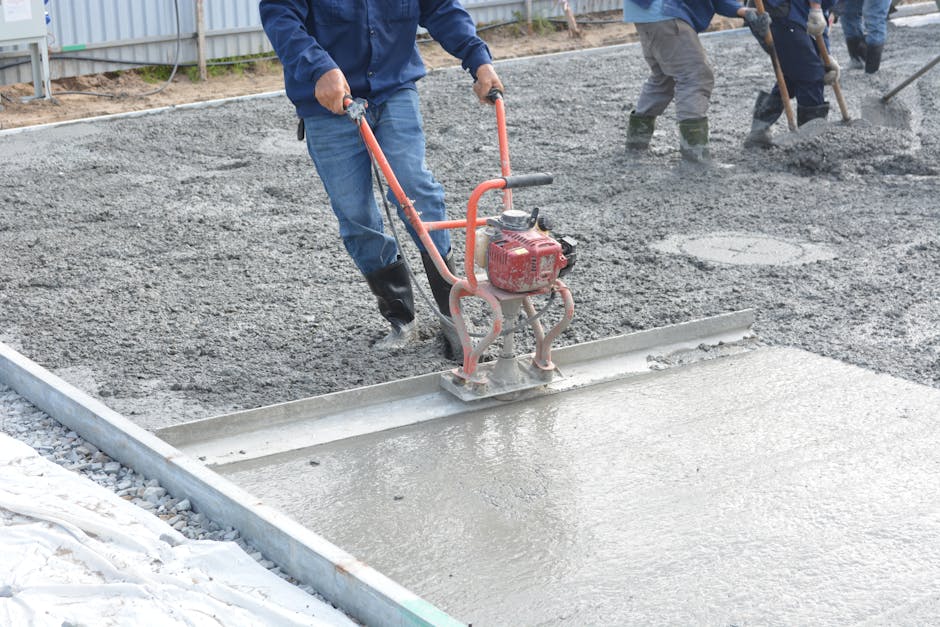
Before concrete is poured, the soil beneath it must be compacted to a density that resists settlement. Loose fill, leftover construction debris, or soil that was simply scraped level without mechanical compaction will settle over time. When it does, the slab above loses support and cracks.
Proper compaction means using a vibratory plate compactor or a sheep's foot roller, working in lifts of no more than six inches. Each lift is compacted before the next is added. This process takes time and equipment, which is why contractors who bid low often skip it. The soil looks flat when they are done, but it lacks the density to hold a foundation. Voids form, slabs crack, and the owner is left with a repair bill that dwarfs the original savings.
The Tulsa Clay Factor
Expansive clay, classified as Vertisol, can swell by up to 30 percent when saturated and shrink dramatically when it dries. This cycle of expansion and contraction exerts tremendous pressure on foundation concrete. Mitigation starts with understanding the moisture content of the subgrade before the pour.
Some projects require pre-soaking the subgrade to a uniform moisture level so that post-construction swelling is minimized. Others benefit from a moisture barrier, a heavy plastic sheet laid between the soil and the concrete, to prevent moisture migration into the slab. The right approach depends on the specific soil report. A contractor who treats every Tulsa lot the same way is not treating any of them correctly.
5 Signs a Concrete Foundation Contractor Is Cutting Corners
Foundation work attracts contractors who compete on price because homeowners rarely see the finished product up close. The concrete gets covered by flooring, landscaping, and drywall. By the time problems surface, the contractor is long gone. These five warning signs will help you identify a bad hire before the pour begins.
Sign one: a flat per-square-foot price quoted over the phone without a site visit. Foundation costs depend on soil conditions, access, grade changes, and structural requirements. No honest contractor prices this work sight unseen.
Sign two: an inability to produce a certificate of insurance showing both general liability and workers' compensation coverage. If a worker gets injured on your property and the contractor has no comp insurance, the liability can fall on you.
Sign three: a recommendation for a four-inch slab under a structure that will hold heavy loads. This is a cost-saving shortcut that violates basic engineering standards for residential foundations.
Sign four: dismissal of soil testing or compaction testing as unnecessary. In Tulsa, this is not a difference of opinion. It is a refusal to do the work that prevents foundation failure.
Sign five: using years of experience as a substitute for a written warranty. Experience matters, but it does not pay for repairs. A legitimate contractor provides a written warranty that specifies coverage for structural cracking, not just cosmetic hairline cracks, and defines the duration and terms clearly.
If the process feels too fast or too easy, the quality is likely too low. Foundation work is methodical, technical, and slow. That is how it should be.
7 Critical Questions To Ask Before Hiring Concrete Foundation Contractors
The interview process is your best defense against a bad hire. These seven questions reveal whether a contractor understands Tulsa conditions and builds accordingly. Pay attention not just to the answers, but to whether the contractor answers directly or deflects.
Question one: what is your process for soil compaction and moisture control? The answer should include specific equipment, lift depths, and a method for verifying compaction before the pour.
Question two: can you show me a project in Tulsa that is five or more years old with no structural cracks? A contractor who stands behind their work will have past clients willing to confirm it.
Question three: what PSI concrete do you use, and what rebar spacing do you recommend? The answer should be specific and match the standards discussed earlier: 3,500 to 4,000 PSI with number four rebar on appropriate centers.
Question four: do you handle your own grading and drainage, or do you subcontract that? Subcontracting is not automatically bad, but you need to know who is responsible and whether they carry the same insurance and quality standards.
Question five: what is your warranty on structural cracking? Listen for specifics. A warranty that covers only hairline cracks or expires after one year is not worth the paper it is printed on.
Question six: how do you handle rain delays during the pour? Pouring concrete into standing water or onto saturated subgrade compromises the slab. The contractor should have a clear protocol for weather delays and protection.
Question seven: can you provide three references from the last twelve months? Recent references are more valuable than old ones. Call them and ask about the contractor's communication, schedule adherence, and whether any issues arose after the pour.
Ask for a line-item estimate rather than a lump sum. A detailed estimate shows you exactly what you are paying for: excavation, compaction, rebar, concrete, finishing, and drainage. A lump sum hides what the contractor is not including.
Foundation Mistakes That Cost You More Later
The most expensive foundation problems are the ones that could have been prevented during construction. Understanding these common mistakes helps you recognize them before they become permanent.
Mistake one is ignoring drainage. Water pooling next to a foundation is the number one cause of slab failure in Tulsa. A foundation built perfectly will still fail if the site drains toward it instead of away from it. Gutters, downspout extensions, and surface grading are not optional add-ons. They are part of the foundation system.
Mistake two is pouring concrete in extreme weather without proper curing methods. Concrete poured below 40 degrees Fahrenheit can freeze before it cures, permanently weakening it. Concrete poured above 90 degrees can cure too quickly, leading to shrinkage cracks and reduced strength. Professional contractors monitor weather windows and use curing blankets or misting as conditions require.
Mistake three is accepting a patch job on a crack that signals soil settlement. Epoxy injection can seal a static crack, but if the crack is active and growing because the soil is moving, the patch is cosmetic. The underlying problem continues until the foundation requires major structural repair.
Mistake four is hiring a general handyman instead of a specialized concrete foundation contractor. Foundations require engineering knowledge, specialized equipment, and experience with local soil behavior. A handyman who pours a patio on weekends is not qualified to pour the concrete that holds up your home or business.
The math is unforgiving. A five-hundred-dollar cheap fix today often leads to a ten-thousand-dollar underpinning job in three years. The savings disappear, and the disruption to your property and your life multiplies.
The Foundation Is a 50-Year Decision
A concrete foundation is not a commodity purchase where the lowest price wins. It is a structural commitment that will either protect your property for decades or become the source of endless repair costs. The contractor you choose determines which outcome you get.
Tulsa's soil does not forgive shortcuts. Expansive clay, heavy rains, and dry summers create a cycle of movement that tests every inch of your foundation every year. The only defense is a foundation built with proper soil preparation, the right concrete mix, correctly placed reinforcement, and a drainage plan that keeps water away from the structure.
Do not let urgency or a low price push you into a bad decision. A foundation poured in a hurry is a foundation that will fail in slow motion, and the cost of fixing it will always exceed the cost of doing it right the first time.
TekTone Builders understands Tulsa's soil, drainage patterns, and climate because we work in it every day. We do not cut corners on compaction, we do not guess on PSI, and we do not skip the soil test. We know the ground underneath you does not forgive mistakes, and we build accordingly.
Schedule a foundation project review with TekTone Builders today. Let us get the prep right, the mix right, and the pour right, the first time. Call us for a free site evaluation and a no-obligation estimate.