
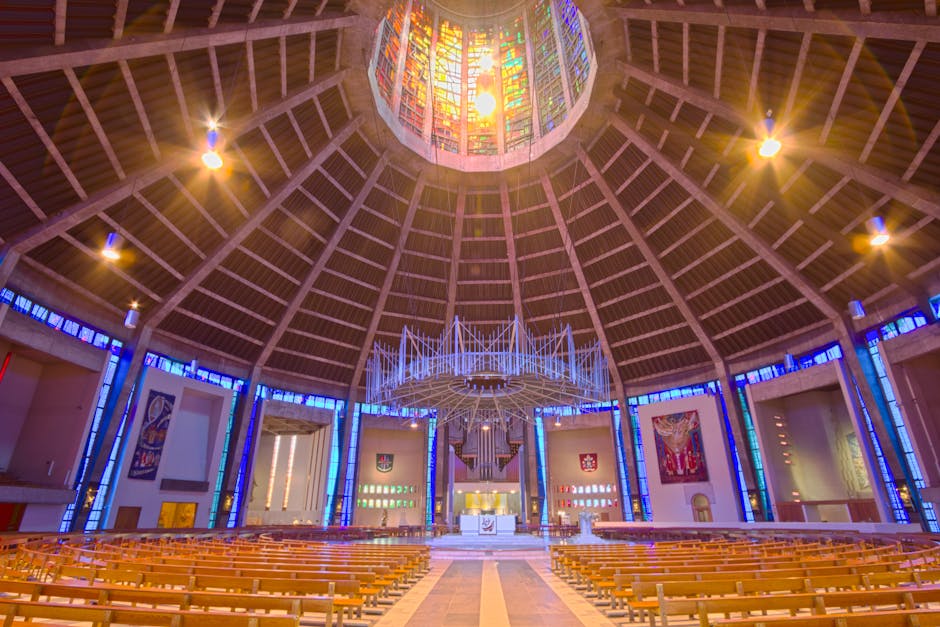
Finding the right church construction contractor is one of the most important decisions your ministry will make in 2026. A building project represents more than steel, concrete, and drywall. It is a physical declaration of your congregation's mission, a space where families will mark life's most sacred moments, and a financial commitment that will shape your church's budget for years to come. Yet for many pastors and building committees, the process feels overwhelming. Most contractors will show you a glossy portfolio, but few will walk you through the real costs, realistic timelines, and hard questions that determine whether a project succeeds or stalls. This guide closes those gaps. It gives you the tools to evaluate builders, understand pricing, plan a schedule, and fund the vision without putting your ministry at risk.
Table of Contents
- Why a Specialized Contractor Matters
- What Does a Church Construction Contractor Actually Do?
- Key Factors to Evaluate Before Hiring a Church Builder
- The Real Cost of Church Construction: A Pricing Guide
- Church Construction Timeline: What to Expect in 2026
- How to Fund Your Church Building Project
- 5 Critical Questions to Ask Every Church Construction Contractor
- Frequently Asked Questions About Church Construction
- Building for the Kingdom, Not Just for Today
Why a Specialized Contractor Matters
A commercial builder who erects office parks and retail centers may be competent, but church construction demands a different set of instincts. Sanctuary acoustics do not behave like conference room acoustics. A worship center must accommodate everything from quiet prayer services to full-band rehearsals without bleeding sound into children's classrooms. Multi-purpose spaces need to flex between fellowship meals, youth group gatherings, and overflow seating on Easter Sunday. A contractor who has never installed a baptistry or coordinated audio, video, and lighting integration with a worship team will learn on your dime.

The stakes are high. Budget overruns on a church project do not just strain finances. They erode trust within the congregation, stall outreach efforts, and can leave a half-finished building sitting empty for months. In 2026, with material costs still volatile and skilled labor in short supply across much of the United States, hiring a contractor who understands ministry-specific design is not a luxury. It is a risk-management strategy.
You will also encounter different delivery models as you research. Some firms use a traditional design-bid-build approach, where you hire an architect separately, then solicit construction bids. Others offer design-build services, keeping architecture and construction under one roof. A third option, used by firms in networks like Building God's Way, is a collaborative model where the builder and architect work together from the earliest design stages to control costs before drawings are finalized. Understanding these distinctions early will help you choose a partner whose process fits your committee's bandwidth and your church's financial reality.
What Does a Church Construction Contractor Actually Do?
A church construction contractor does far more than swing hammers and pour foundations. The best firms function as strategic partners from the moment your leadership team begins discussing a building project, not just when the blueprints are ready.
New construction is the most visible service. This covers ground-up builds for sanctuaries, worship centers, family life centers, and educational wings. A contractor with faith-based experience will ask questions a general commercial builder might miss: How does your congregation flow from the parking lot to the lobby to the sanctuary? Where do first-time visitors go when they arrive with young children? How will the building feel on a Wednesday night when only 40 people are present, versus a Sunday morning with 400?

Renovation and expansion work is equally common and often more complex. Converting a dated fellowship hall into a modern worship space, adding a wing for children's ministry, or modernizing an HVAC system that has been limping along since the 1970s all require surgical precision. The contractor must understand how to keep your existing ministries running while construction happens around them.
Design-build services consolidate architecture and construction into a single contract. This eliminates the finger-pointing that can occur when an architect blames the builder and the builder blames the architect. For churches without a dedicated facilities manager on staff, this single point of contact can save hundreds of hours of committee time.
Pre-construction consulting is the phase most congregations undervalue. Before any dirt moves, a qualified contractor will evaluate potential sites, run feasibility studies, produce preliminary budgets, and flag zoning or permitting issues that could derail the project later. Skipping this step to save money almost always costs more in the long run.
Key Factors to Evaluate Before Hiring a Church Builder
Selecting a contractor is not like choosing a photocopier. You are entering a multi-year relationship that will test your patience, your budget, and your committee's unity. These four criteria should anchor your evaluation.
1. Proven Experience with Faith-Based Projects
A contractor's general portfolio tells you they can build. Their church-specific portfolio tells you they understand why you are building. Look for a firm that has completed at least ten church projects of similar scope to yours. Some established firms, like Hilbers, Inc., can point to over 500 completed faith-based projects nationwide. That volume matters because it means they have encountered and solved the problems unique to ministry construction.
Ask for references and call them. Speak directly with the building committee chair from the last three churches the contractor completed. Ask what went wrong, how the contractor responded, and whether they would hire the same firm again. Pay attention to whether the contractor understands sacred space nuances: baptistry plumbing and heating, sightlines to the pulpit and screens, flexible seating configurations, and the integration of audio, video, and lighting systems that volunteers will operate.
2. Financial Transparency and Budgeting
This is the area where most church projects go sideways, and it is also where the current market offers the least guidance. A reputable church construction contractor will provide a detailed line-item budget, not a single lump-sum number that hides assumptions you cannot scrutinize.
Ask for the cost per square foot broken down by space type. A sanctuary with 30-foot ceilings and advanced acoustics costs far more per square foot than a classroom wing. In 2026, new church construction typically falls between $150 and $350 per square foot nationally, with renovation work ranging from $75 to $200 per square foot. Your region, finish level, and site conditions will push you toward the higher or lower end of those ranges.
Equally important is the contractor's change order policy. Unexpected conditions arise on every project. How are they priced? Is there a cap? Who approves them? A contractor who cannot answer these questions clearly during the interview phase will not become more transparent once the contract is signed.
3. Timeline and Project Scheduling
Church construction projects do not move quickly, and unrealistic promises during the sales process lead to frustration later. A typical church project of 10,000 to 30,000 square feet takes 12 to 18 months from design completion to move-in. The full process, including pre-design and permitting, often spans 14 to 24 months.
Ask the contractor to walk you through a sample schedule for a project of your size. Inquire about phased construction if your congregation needs to remain in its current building during the work. Understand how weather, supply chain disruptions, and municipal permitting delays are accounted for in the timeline. A contractor who blames every past delay on external factors without explaining their mitigation strategies is signaling how they will handle problems on your project.
4. Alignment with Your Church's Mission and Values
Some contractors treat church projects as just another revenue stream. Others frame their work as ministry. The difference shows up in how they communicate, how they handle conflict, and whether they pray with you when challenges arise.
Look for firms where leadership has genuine ministry experience. One contractor in the Building God's Way network, SB Construction Group, has a Ministry Project Development lead who spent 36 years as a lead pastor before joining the construction team. That kind of empathy is not a marketing gimmick. It means someone on the other side of the table understands the weight of shepherding a congregation through a building campaign.
Ask whether the contractor has a faith statement or partnership model that resonates with your denomination. Observe how they treat your committee during the interview process. Do they listen more than they talk? Do they ask about your ministry vision before they discuss square footage? The relational dynamics established during courtship tend to persist through construction.
The Real Cost of Church Construction: A Pricing Guide
The silence around church construction pricing in the marketplace does not serve churches well. While every project is unique, understanding the ranges and cost drivers empowers you to plan realistically.
For new construction in 2026, expect to budget between $150 and $350 per square foot. A basic worship center with simple finishes and minimal audio-visual integration will land at the lower end. A sanctuary with custom millwork, theatrical lighting, high-end acoustics, and a commercial-grade kitchen will push toward the upper end. Renovation projects typically range from $75 to $200 per square foot, with the wide spread reflecting whether you are refreshing finishes or gutting the space to the studs.
The major cost drivers include site preparation, which can add tens of thousands of dollars if your land requires extensive grading, retaining walls, or utility extensions. HVAC systems for large-volume sanctuary spaces are significantly more expensive than those for standard commercial buildings. Audio, video, and lighting systems have become essential for modern worship, and they can easily account for 10 to 15 percent of the total project budget. Parking lot paving and stormwater management are frequently underestimated line items.
Hidden costs catch committees off guard. Permits and impact fees vary widely by municipality and can reach five figures. Architectural and engineering fees typically run 6 to 12 percent of construction costs. If your church must rent temporary worship space during construction, factor that into the total project budget from day one.
To get a realistic budget, work with a contractor who will provide a Guaranteed Maximum Price early in the design phase. A GMP establishes a ceiling on costs while allowing savings if the project comes in under budget. This model aligns the contractor's incentives with yours in a way that a simple cost-plus contract does not.
Church Construction Timeline: What to Expect in 2026
Understanding the full arc of a church building project prevents the discouragement that sets in when committees realize how long the process truly takes. Here is a realistic breakdown of the four major phases.
Phase one is pre-design and feasibility, lasting two to four months. During this period, you will evaluate potential sites, conduct zoning due diligence, engage a capital campaign consultant if needed, and work with your contractor on preliminary budget scenarios. Rushing through this phase to "get shovels in the ground" is the single most common mistake churches make.
Phase two covers design and permitting, spanning four to eight months. Your architect will develop schematic designs, refine them into construction documents, and submit them to the local building department. Municipal review timelines vary dramatically. A small town may turn around permits in six weeks. A major city can take six months. Your contractor should have local experience and realistic expectations for your jurisdiction.
Phase three is construction, typically eight to fourteen months. This includes site work, foundation, structural framing, mechanical and electrical rough-in, drywall, finishes, and AVL installation. Weather delays are inevitable in much of the country. A contractor who builds buffer into the schedule from the start will keep your committee informed rather than constantly delivering bad news.
Phase four is commissioning and move-in, lasting one to two months. Final inspections, punch list completion, AVL system tuning, and volunteer training all happen here. Do not schedule your first service the weekend after you receive the certificate of occupancy. Give your team time to learn the building before the congregation fills the seats.
How to Fund Your Church Building Project
Even the best contractor cannot build without a funded vision. Most churches rely on capital campaigns, and engaging a professional fundraising consultant early in the process pays for itself many times over. A well-run campaign does more than raise money. It builds congregational unity around the vision and gives every member a stake in the outcome.
Specialized church lenders understand ministry cash flow in ways that conventional banks do not. Institutions like the Evangelical Christian Credit Union and various church loan funds will evaluate your giving trends, attendance patterns, and leadership stability rather than applying a rigid commercial underwriting formula. Start conversations with lenders during the pre-design phase so you know your borrowing capacity before you fall in love with a design you cannot afford.
Phased construction is a practical strategy for churches that want to avoid excessive debt. Build the worship center and core classrooms now. Add the gymnasium or family life center in a second phase when additional funds are available. Your contractor should design the initial phase with future expansion in mind, including stub-outs for utilities and logical connection points for future wings.
Keep your debt-to-income ratio below 25 percent of your annual operating budget. A building that forces you to cut ministry staff or eliminate outreach programs is not serving your mission. The right contractor will help you design a project that fits your financial reality, not someone else's.
5 Critical Questions to Ask Every Church Construction Contractor
Before you sign any contract, get clear answers to these five questions. The responses will tell you more than any brochure.
First, ask for the last three churches they built and permission to contact the building committee chairs directly. If they hesitate, that is your answer.
Second, ask how they handle cost overruns and whether there is a cap on change orders. Listen for specific policies, not vague assurances.
Third, ask for a sample timeline and what happens if they miss the deadline. Do they offer liquidated damages? How do they communicate schedule changes?
Fourth, ask whether they self-perform the work or subcontract most of it. Both models can work, but you need to know who will actually be on your site and how they vet their subcontractors.
Fifth, ask how they ensure the project stays on budget without sacrificing quality. Look for a defined value engineering process that involves your committee, not unilateral decisions made in the field.
Frequently Asked Questions About Church Construction
Do I need a separate architect, or can the contractor handle design?
Many church construction contractors offer design-build services, which consolidate architecture and construction under one contract. This approach can save time and reduce miscommunication between designers and builders. However, some churches prefer to hire an independent architect to serve as their advocate throughout the process. Either model works if the parties communicate well and roles are clearly defined.
How long does it take to build a church?
From initial consultation to first service, expect 14 to 24 months. Smaller renovation projects may finish in 6 to 9 months. Large, complex new construction can extend beyond two years, particularly in jurisdictions with slow permitting processes.
Can we stay in our current building during construction?
Yes, if the project is planned with phasing in mind. Discuss swing space, temporary walls, noise mitigation, and safety protocols with your contractor during the design phase. Occupied renovation costs more and takes longer, but it is feasible with the right planning.
What is the average cost per square foot for a church?
In 2026, new construction ranges from $150 to $350 per square foot. Renovations range from $75 to $200 per square foot. Your final cost depends on region, finish level, site conditions, and the complexity of your audio-visual and mechanical systems.
How do I find a church construction contractor near me?
Search for "church building contractors near me" and review portfolios for local projects. Check whether the contractor belongs to a faith-based network like Building God's Way, which vets members for both construction competence and ministry alignment. Always visit completed projects in person and speak with past clients before making your decision.
Building for the Kingdom, Not Just for Today
A church building is a tool for ministry, not a monument to a committee. The right contractor understands this distinction. They bring financial discipline that protects your congregation from unnecessary debt, timeline clarity that reduces anxiety during the long months of construction, and a genuine sense of partnership in your mission.
Take your time in the selection process. Visit completed projects. Call references. Ask the hard questions about budgets, schedules, and change orders that most guides never mention. Whether you need a small renovation or a 500-seat sanctuary, the right church construction contractor will be your partner in ministry, helping you build a space that serves your congregation for generations to come.
Related reading: Church Fellowship Hall Construction: 2026 Guide for Committees.
Related reading: Garage Construction Contractors: How to Choose the Right One.