
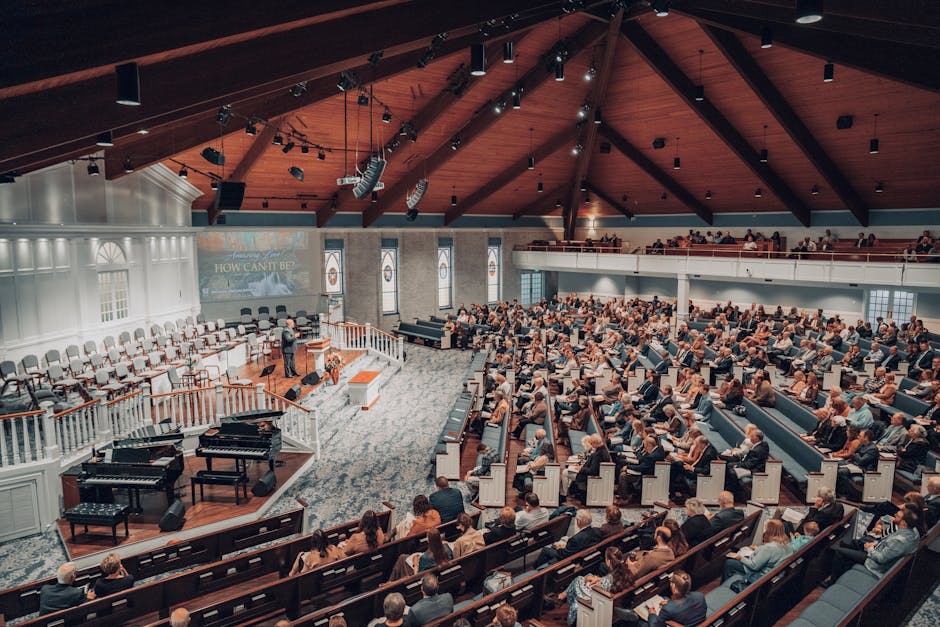
A new fellowship hall represents more than just additional square footage on your church campus. It is a strategic investment in ministry, a physical space where community happens, meals are shared, and relationships deepen outside the sanctuary walls. For building committees, church fellowship hall construction can feel like a balancing act: you are managing a significant budget, navigating local regulations, and trying to anticipate the needs of a growing congregation five or ten years from now. The decisions you make today about materials, layout, and phasing will shape how your church serves its members for decades. This guide walks you through the critical choices, realistic cost expectations, and the step-by-step process to bring a versatile, durable fellowship hall to life in 2026.
Table of Contents
- Why 2026 Is a Strategic Year for Church Building Projects
- Steel vs. Traditional Construction: The 2026 Decision
- Popular Fellowship Hall Sizes and Floor Plan Configurations
- Understanding the True Cost of Church Fellowship Hall Construction
- The Construction Process: From Permits to Certificate of Occupancy
- Designing for Acoustics, AV, and Energy Efficiency
- How Churches Fund Fellowship Hall Projects
- Finding the Right Church Fellowship Hall Contractor
- Frequently Asked Questions About Church Fellowship Hall Construction
- Start Your Fellowship Hall Project with Confidence
Why 2026 Is a Strategic Year for Church Building Projects
The religious construction market has entered a period of renewed momentum. Total U.S. spending on religious facilities reached $3.9 billion in 2024, according to U.S. Census Bureau data, marking a 50 percent increase from the 2022 low of $2.6 billion. While still below the $8.8 billion peak recorded in 2003, this upward trajectory signals healthier contractor availability and more predictable material supply chains heading into 2026.

Interest rates and material costs are showing signs of stabilization after several volatile years. For church boards, this creates a favorable window to lock in pricing on steel packages and concrete work before potential increases. Contractors are bidding more competitively, and lead times for pre-engineered steel components have shortened considerably compared to the pandemic era.
Churches are also rethinking how they use space. The trend has shifted decisively toward multi-purpose fellowship halls that can host worship services, community dinners, weekday Bible studies, and youth programs under one roof. This approach maximizes the return on every square foot. After years of disrupted in-person gatherings, congregations now place a higher premium on flexible indoor space designed for connection. A well-planned fellowship hall becomes the most heavily used building on campus, often operating seven days a week.
Steel vs. Traditional Construction: The 2026 Decision
Why Steel Dominates Modern Fellowship Hall Construction
Steel has become the material of choice for church fellowship hall construction, and the reasons go beyond simple cost comparisons. Pre-engineered steel buildings offer clear-span interiors with no interior columns, reaching up to 300 feet of unobstructed space. For a fellowship hall, this means you can host a seated dinner for 300 guests, set up a full-size basketball court, or arrange worship seating with clear sightlines to a stage, all without posts blocking anyone's view.
Steel is non-combustible, which can lower insurance premiums and provides peace of mind for buildings that will host large gatherings. It resists pests, mold, and rot in ways that wood framing simply cannot match over a 50-year lifespan. For budget-conscious church boards, the long-term maintenance savings are substantial. There is no need to budget for periodic termite treatments, replacement of rotted sill plates, or exterior painting cycles.

Popular fellowship hall sizes, including 40×60, 50×80, and 60×100 feet, are available as pre-engineered packages. These standard dimensions allow manufacturers to use existing engineering calculations, which reduces design fees and accelerates permitting. On-site erection moves quickly: a typical steel frame for a fellowship hall can be assembled in two to four weeks, depending on weather and crew size. Fewer labor hours translate directly to lower construction costs.
When Traditional Materials Still Make Sense
Steel is not the only answer for every project. Some churches need to match the architectural character of an existing historic sanctuary built from brick or stone. A fellowship hall clad entirely in metal panels might feel disconnected from a campus where the worship center features hand-laid limestone and stained glass. In these cases, a hybrid approach works best. A steel frame provides the structural efficiency and clear spans, while brick veneer, stone wainscoting, or fiber cement siding delivers the traditional aesthetic.
Local zoning codes and historic district regulations can also influence material choices. Some municipalities restrict the use of exposed metal exteriors on church properties within designated historic overlay zones. Before committing to a material package, have your architect or contractor verify what exterior finishes are permissible. The good news is that modern steel buildings accept virtually any cladding system, so you rarely face a binary choice between structural performance and visual compatibility.
Popular Fellowship Hall Sizes and Floor Plan Configurations
Choosing the right size requires honest projections about attendance, not just for Sunday services but for weddings, funerals, community outreach events, and weekday programming. Standard pre-engineered sizes serve as useful starting points. A 40×60-foot hall provides 2,400 square feet and works well for congregations of 100 to 150 people. Stepping up to a 50×80-foot building yields 4,000 square feet and comfortably accommodates 200 to 250 guests at seated events. For larger congregations, a 60×100-foot hall offers 6,000 square feet, enough for 300 to 400 people plus space for a serving line and stage.
Floor plans should prioritize flexibility. The most successful fellowship halls combine a large open gathering area with strategically placed support spaces. A commercial or warming kitchen belongs adjacent to the main hall, with a serving window or pass-through that allows efficient meal service without traffic jams. Restrooms should be accessible from the hall without requiring guests to walk through the kitchen or storage areas. Many churches include one or two classrooms or meeting rooms along one side, separated by operable partition walls that can be opened to expand the main space for large events.
Include a raised platform or stage area at one end of the hall, even if your primary worship remains in the sanctuary. This platform serves for guest speakers, musical performances, wedding receptions, and children's programs. Design the slab and foundation with future expansion in mind. If your master plan includes a youth wing or gymnasium, pouring a foundation capable of supporting an addition saves significant money compared to retrofitting later. Also ensure all entrances, restrooms, and pathways meet ADA accessibility standards, which is both a legal requirement and a pastoral commitment to welcoming all members.
Understanding the True Cost of Church Fellowship Hall Construction
Church building committees consistently rank cost as their top concern, yet most online resources avoid giving specific numbers. The reality is that no single price applies to every project, but realistic ranges help you plan. For a turnkey steel fellowship hall completed in 2026, expect to budget between $80 and $150 per square foot. A basic 50×80-foot hall at the lower end of that range would total approximately $320,000, while a fully finished 60×100-foot hall with a commercial kitchen and upgraded finishes could reach $900,000 or more.
Several major cost drivers shape the final number. The concrete slab typically consumes 20 to 25 percent of the total budget. This includes site grading, vapor barriers, reinforcement, and the pour itself. The steel building package, including the frame, roof, wall panels, and trim, accounts for roughly 30 to 35 percent. Interior fit-out, covering the kitchen, restrooms, HVAC, electrical, plumbing, drywall, flooring, and lighting, makes up the remaining 40 to 50 percent.
Hidden costs catch many committees off guard. Permit fees, impact fees assessed by local governments, engineering stamps, and soil testing can add $10,000 to $25,000 before any dirt moves. If your site requires significant grading, retaining walls, or extended utility runs from the street, those costs climb higher. Temporary facilities during construction, such as portable restrooms or alternate meeting space, should also appear in your budget.
Cost-saving strategies do exist without sacrificing quality. Choosing a standard pre-engineered size avoids custom engineering charges. A simple gable roof with a moderate pitch costs less than complex roof geometries. Phasing interior finishes allows you to spread spending over multiple budget years: complete the shell, slab, restrooms, and basic electrical first, then add the kitchen and classroom finishes in a subsequent phase.
The Construction Process: From Permits to Certificate of Occupancy
Phase 1: Site Preparation and Permits
The most common source of project delays is starting work before all permits are secured. Your contractor or architect should pull permits from the local building department, which typically requires submitting stamped engineering drawings, site plans, and energy compliance documentation. Allow 60 to 90 days for permit review, longer in jurisdictions with understaffed building departments.
Before the slab can be poured, a geotechnical engineer must test the soil to determine its bearing capacity and drainage characteristics. Poor soils may require over-excavation and engineered fill, adding cost but preventing slab settlement and cracking later. Zoning hurdles also demand early attention. Your municipality will enforce setback requirements dictating how close the building can sit to property lines, parking ratios that typically require one space per four seats, and stormwater management plans that prevent runoff from overwhelming local drainage systems.
Phase 2: Foundation and Steel Erection
With permits in hand and soil tests complete, the site is graded and forms are set for the concrete slab. A typical fellowship hall requires a 4- to 6-inch thick reinforced slab with thickened edges where load-bearing walls will rest. The concrete must cure for at least seven days before steel erection begins, and full strength develops over 28 days. Rushing this step compromises the foundation.
Steel erection for a standard fellowship hall takes two to four weeks. The primary framing goes up first, followed by secondary framing, roof panels, and wall panels. Inspections occur at key milestones: foundation inspection before the pour, framing inspection after the steel is up, and rough-in inspections for electrical, plumbing, and mechanical systems before drywall covers the walls.
Phase 3: Interior Fit-Out and Finishing
Once the building is enclosed and weathertight, interior work begins. Insulation is installed first, with spray foam or fiberglass batts achieving R-values between R-19 and R-38 depending on climate zone and local code requirements. Drywall or interior metal panels go up next, followed by painting, flooring, and trim. The kitchen, restrooms, HVAC equipment, lighting, and audio-visual systems are completed in this phase. A final inspection by the building department leads to the certificate of occupancy, which legally permits your congregation to use the space.
Designing for Acoustics, AV, and Energy Efficiency
Large steel buildings present acoustic challenges that wood-framed structures with lower ceilings do not. Hard surfaces like metal panels and concrete floors reflect sound, creating echo and making speech unintelligible. Address this early in the design phase. Acoustic panels mounted on walls and ceilings absorb sound energy. Carpet or vinyl composition tile with an acoustic underlayment quiets foot traffic noise. A suspended acoustic tile ceiling below the roof deck dramatically reduces reverberation while concealing ductwork and wiring.
Audio-visual infrastructure should be planned before the walls are closed. Pre-wire for projectors, motorized screens, speakers, and stage lighting during the framing phase. Retrofitting AV cabling after drywall is installed costs significantly more and often results in visible conduit runs that detract from the finished appearance. Consider running empty conduit from the AV booth location to the stage and projector positions to accommodate future technology upgrades.
Energy efficiency directly affects the church's operating budget for decades. Insulate to local code minimums at a minimum, and consider exceeding them in the roof where heat gain is greatest. Reflective roof coatings in lighter colors reduce cooling loads in summer. LED lighting throughout the building cuts electricity consumption compared to fluorescent or incandescent fixtures. Zoned HVAC systems allow you to heat or cool only the spaces in use: the main hall on Sunday mornings, a classroom on Wednesday evenings, without conditioning the entire building.
How Churches Fund Fellowship Hall Projects
Most congregations fund new construction through a capital campaign, where members pledge gifts over a three- to five-year period. Conducting a feasibility study before launching the campaign helps gauge giving capacity and identifies potential lead donors. Professional campaign consultants can guide this process, though their fees should be factored into the overall project budget.
Church loans from specialized lenders offer another funding avenue. Organizations like the Church Development Fund and Thrivent Church Loan program understand the financial structure of religious nonprofits and offer terms that conventional banks may not. Interest rates for church loans in 2026 typically run slightly higher than residential mortgage rates, with terms extending to 20 or 25 years.
Some denominations and private foundations provide matching grants for construction projects, particularly those that expand community outreach capacity. Research grant opportunities early, as application cycles may run six to twelve months ahead of award dates. Phased construction also eases financial pressure. Build the shell and slab with initial funds, then finish interior spaces as subsequent gifts and offerings come in. This approach requires patience but avoids taking on excessive debt.
Finding the Right Church Fellowship Hall Contractor
The success of your project depends heavily on the contractor you select. Look for builders with specific experience in church fellowship hall construction, not just general commercial work. Church projects involve unique considerations: coordinating volunteer labor for certain finish tasks, working around worship schedules, and understanding the aesthetic expectations of a congregation. Ask for references from at least three similar projects and call those references to ask about schedule adherence, change order frequency, and how the contractor handled unexpected issues.
Verify that any contractor you consider holds current licensing, general liability insurance, and bonding capacity appropriate for your project size. Request a detailed scope of work document that specifies every material, finish, and fixture. A fixed-price contract protects your budget from runaway change orders, though you should still reserve a contingency fund of 10 to 15 percent for unforeseen conditions. If you are building with steel, check whether the contractor belongs to the Metal Building Contractors and Erectors Association, which indicates a commitment to industry standards and continuing education.
Insist on a construction timeline with defined milestones and a payment schedule tied to completed phases, not calendar dates. Payments should align with verifiable progress: slab completion, steel erection, rough-in inspections, and final occupancy.
Frequently Asked Questions About Church Fellowship Hall Construction
How long does it take to build a fellowship hall?
Most projects take six to twelve months from permit approval to certificate of occupancy. Smaller buildings on simple sites trend toward the shorter end, while larger halls with commercial kitchens and complex site work extend toward twelve months.
Can we build a fellowship hall on a tight budget?
Yes. Choose a standard pre-engineered steel size to avoid custom engineering costs. Phase the interior finishes so the hall is usable while you raise additional funds. Some churches use volunteer labor for painting, flooring installation, and landscaping, though verify with your local building department which tasks require licensed professionals.
Do we need a separate kitchen?
Most churches include at least a warming kitchen with a sink, refrigerator, and counter space for food preparation. A full commercial kitchen with a hood suppression system, walk-in cooler, and multiple ovens adds $30,000 to $80,000 to the budget. Evaluate how frequently you will host large meals before committing to a full commercial setup.
What is the best material for a fellowship hall?
Steel offers the best combination of cost, construction speed, and clear-span flexibility for most congregations. It outperforms wood in durability and fire resistance, and it accepts exterior finishes that match any architectural style.
Start Your Fellowship Hall Project with Confidence
Church fellowship hall construction represents one of the most impactful investments a congregation can make. The decisions you make about materials, size, and phasing will determine how well the building serves your church community for generations. Steel has emerged as the dominant material choice for 2026, offering column-free interiors, lower long-term maintenance, and faster construction timelines. Budget realistically in the $80 to $150 per square foot range, prioritize multi-purpose design, and select a contractor with demonstrated church construction experience. A well-executed fellowship hall becomes more than a building. It becomes the setting for countless meals shared, friendships formed, and lives changed.
Ready to discuss your church fellowship hall construction project? Contact TekTone Builders today for a free estimate and personalized consultation.
Related reading: Worship Center Construction Guide 2026: Costs & Planning.