
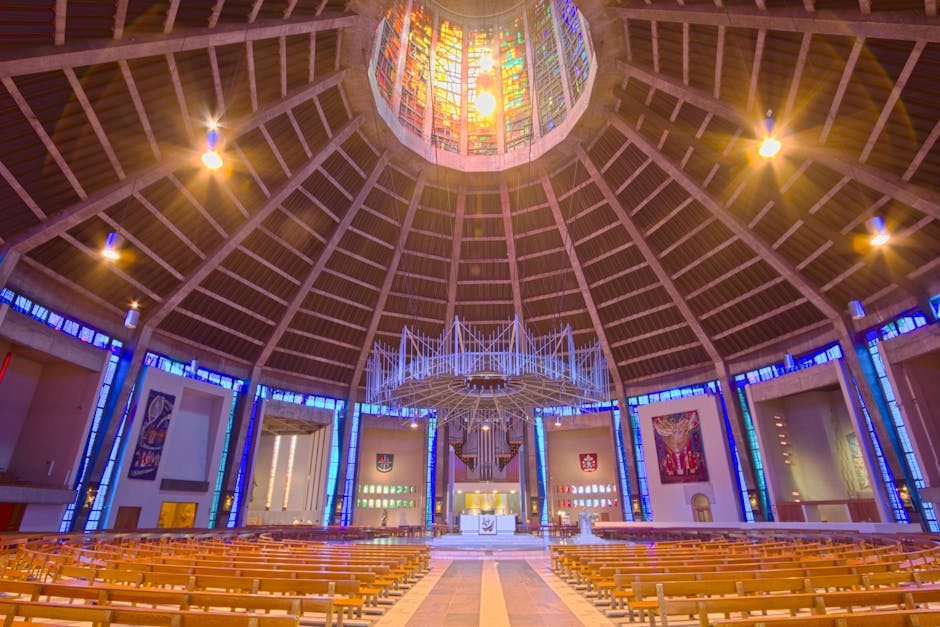
Building or renovating a house of worship is one of the most significant undertakings a congregation will ever face. It is not simply a construction project; it is a physical manifestation of a community’s faith, vision, and commitment to future generations. Finding the right commercial church builders requires more than just comparing bids. It demands a partner who understands that every square foot must balance sacred purpose with practical function, all while respecting the financial sacrifices of the congregation. This guide walks church leadership teams through the entire process, from understanding what makes church construction unique to navigating costs, regulations, and contractor selection in 2026.
Table of Contents
- Why Church Construction Is Different from Standard Commercial Building
- Types of Commercial Church Builders: Which Is Right for Your Project?
- The Church Construction Process: A Step-by-Step Timeline for 2026
- How Much Do Commercial Church Construction Projects Cost in 2026?
- Legal and Regulatory Must-Knows for Church Building Projects
- Questions to Ask Every Commercial Church Builder Before Hiring
- Why TekTone Builders Is Trusted by Churches Across the United States
Why Church Construction Is Different from Standard Commercial Building
A church is not an office building. It is not a retail store. The differences go far beyond the presence of a steeple or stained glass, and experienced commercial church builders know this from the first site visit.
Places of assembly carry unique occupancy classifications under the building code, typically A-2 or A-3, which trigger stricter requirements for fire suppression, exit capacity, and emergency lighting. A sanctuary designed for 500 worshippers must have egress pathways calculated precisely, and those calculations change when the same space converts into a fellowship hall with tables and chairs. ADA compliance extends beyond ramps and restrooms to include assistive listening systems, sightlines for wheelchair users, and accessible chancel areas. These are not optional upgrades; they are legal and moral imperatives.

Modern churches also demand extraordinary flexibility from their buildings. A single room may need to function as a worship space on Sunday morning, a community food pantry on Tuesday, and a youth group gathering on Friday night. Achieving this requires specialized acoustic treatments that can adapt to spoken word, amplified music, and casual conversation. It requires HVAC zoning that can efficiently condition a full sanctuary or a single classroom wing. Lighting systems must transition from theatrical stage settings to warm, intimate fellowship modes. A general commercial contractor who has only built retail shells may not anticipate these layered demands.
Budget sensitivity adds another dimension. Church construction is funded through the sacrificial giving of congregants, often through multi-year capital campaigns. Every dollar carries weight, and transparency from the builder is not just appreciated; it is a matter of stewardship. Value engineering, the process of finding cost savings without compromising quality or safety, becomes a collaborative exercise rather than a adversarial negotiation. The best commercial church builders approach this with humility, recognizing that they are stewarding resources entrusted to the church by its members.
Finally, ministry cannot simply pause during construction. Unlike a retail store that can close for a renovation, a church must continue holding services, hosting funerals, running childcare programs, and serving the community. This requires a construction team that sequences work carefully, stages materials discreetly, and communicates proactively about noise, dust, and access. Some firms, such as Weaver Commercial, have developed specific non-disruption protocols that keep church activities running while major construction proceeds just feet away. This operational sensitivity is a hallmark of a builder who truly understands the church environment.
Types of Commercial Church Builders: Which Is Right for Your Project?
Not all commercial church builders operate the same way, and choosing the right model for your congregation’s needs can determine whether the project runs smoothly or becomes a source of constant stress. Three broad categories define the landscape in 2026.
National Faith-Based Networks
National networks like Building God’s Way offer a turnkey experience built on standardized designs and a shared statement of faith. These organizations have refined their processes across hundreds of projects nationwide, which means a church in Ohio can benefit from lessons learned on a project in Texas. Their supply chains are established, their design templates are proven, and their contractors are vetted for both competence and character.
This model works best for churches that want a predictable, replicable outcome and value working with a team that explicitly shares their Christian mission. The trade-off is flexibility. Standardized designs can limit architectural creativity, and a national firm may not have deep relationships with local planning departments, which can slow permitting. For a church that wants a truly custom sanctuary or has a complex infill site, a national network may feel constraining.

Regional Specialized Contractors
Firms like Forest Construction in Southern California or Weaver Commercial in the Mid-Atlantic represent the regional specialist model. These companies have spent decades building within a defined geographic area, accumulating portfolios of local church projects and, crucially, relationships with the municipal building departments, fire marshals, and planning commissions that govern construction in their territory.
A regional specialist knows which inspectors will flag certain details, which zoning board members ask specific questions, and which subcontractors have experience with sanctuary AVL systems. Their references are likely churches within driving distance, which means your building committee can visit completed projects and speak with pastors face to face. The limitation is geographic: if your church is outside their service area, you will need to look elsewhere. High demand can also mean longer lead times, so early engagement is essential.
General Commercial Contractors with Church Experience
Some firms, such as Hardt Construction Services or Beyond Measure Design and Construction, bring broad commercial expertise and have completed enough church projects to understand the nuances. These contractors often excel at tenant improvements, making them ideal for churches that are leasing or purchasing existing commercial space and need to convert a warehouse, retail bay, or office suite into a worship environment.
The advantage is versatility. A general commercial contractor may bring fresh perspectives from other sectors and can handle complex structural modifications or site work that a church-only builder might subcontract out. The potential gap is in the intangibles: sanctuary acoustics, fellowship hall flow, and the emotional intelligence required to work with volunteer building committees. Churches considering this route should ask pointed questions about the contractor’s specific church project experience and request references from congregations, not just businesses.
The Church Construction Process: A Step-by-Step Timeline for 2026
Understanding the full arc of a church building project helps leadership teams plan realistically and communicate clearly with their congregation. While every project is unique, the following timeline reflects current conditions in 2026, including permitting backlogs and material lead times.
Phase 1: Vision, Needs Assessment, and Capital Campaign (Months 1–4)
Before a single drawing is produced, the church must define its why. Is the project driven by growth that has outstripped seating capacity? A need for accessible facilities that welcome elderly and disabled members? A vision for community outreach that requires a commercial kitchen and flexible gathering spaces? Clarity on these questions shapes every decision that follows.
Engaging a church architect early, even for conceptual sketches, gives donors something tangible to respond to during the capital campaign. Most church lenders require 20 to 30 percent of the total project cost to be pledged before construction financing is approved, so the campaign is not a preliminary step; it is the financial foundation. Simultaneously, the church should begin site evaluation. Zoning verification, soil testing, and environmental studies can take 60 to 90 days and may reveal constraints that affect the budget or timeline.
Phase 2: Design, Permitting, and Contractor Selection (Months 5–10)
With funding taking shape, the church issues a request for proposals to three to five qualified commercial church builders. The evaluation should weigh more than the bottom-line number. A builder’s plan for minimizing disruption, their experience with your specific occupancy type, and their references from similar congregations all matter.
Design development during this phase integrates the technical systems that make a church functional: audio, video, and lighting infrastructure for the sanctuary, commercial kitchen specifications for the fellowship hall, and classroom layouts that support multiple age groups. Permitting for places of assembly is rigorous. Plan review and approval typically require 8 to 12 weeks, with particular scrutiny on fire suppression systems, exit calculations, and ADA compliance. Builders with local permitting experience can anticipate reviewer concerns and avoid costly resubmissions.
Phase 3: Construction and Ministry Continuity (Months 11–18)
Construction begins in earnest, but ministry continues. The builder should schedule major work around the church calendar, avoiding Easter, Christmas, Vacation Bible School, and other high-traffic seasons. Staging areas must be clearly defined, and temporary walls or barriers should separate construction zones from occupied spaces.
Weekly owner-architect-contractor meetings keep the budget and timeline on track. A guaranteed fixed price model, such as the one offered by Beyond Measure, protects the church from material cost increases that can derail a project mid-stream. Phased occupancy strategies allow the congregation to move into completed classrooms or offices while the sanctuary remains under construction, reducing the need for temporary rental space.
Phase 4: Final Handover and Post-Occupancy (Month 19 and Beyond)
The final inspection and certificate of occupancy mark the legal completion of the project, but the builder’s responsibility does not end there. A thorough warranty orientation should include training on HVAC controls, fire alarm panels, security systems, and any specialized AVL equipment. Church staff and volunteers need to feel confident operating the building’s systems.
Schedule an 11-month walkthrough with the builder to identify and address any punch-list items before the one-year warranty expires. This is also an opportunity to fine-tune systems based on real-world use: adjusting thermostat schedules, reprogramming lighting scenes, or modifying door hardware that proves awkward in daily operation.
How Much Do Commercial Church Construction Projects Cost in 2026?
Cost is the question every building committee asks first, and it is the one that requires the most nuanced answer. No reputable commercial church builder will quote a price without understanding the project scope, site conditions, and finish level. Industry benchmarks, however, provide a starting point for planning.
New church construction in the United States typically ranges from $200 to $400 per square foot in 2026, with the final figure depending heavily on location, complexity, and material choices. A simple worship space with basic finishes in a rural area will land at the lower end. A multi-story urban church with a full AVL production system, commercial kitchen, and high-end architectural details will push toward the upper end or beyond. Renovation projects generally run $100 to $250 per square foot, though unforeseen conditions in older buildings can add costs.
Several factors drive church construction costs higher than standard commercial rates. Sanctuary acoustics require specialized design and materials to control reverberation and sound isolation. Commercial kitchen installations must meet health department standards. Multi-purpose flooring must withstand both worship services and community events. Site work, including parking lots, stormwater management, and landscaping, often surprises churches with its expense.
A guaranteed fixed price model offers meaningful protection. Material price volatility has been a persistent challenge since 2020, and a fixed price shifts that risk from the church to the contractor. Churches should also budget for hidden costs: permitting fees, impact fees assessed by local governments, utility connection charges, and the cost of renting temporary worship space during construction.
Legal and Regulatory Must-Knows for Church Building Projects
Church construction intersects with a complex web of federal, state, and local regulations. Ignoring any of them can result in costly delays or legal exposure.
ADA compliance applies fully to all new church construction and major renovations. This means accessible parking, ramps or level entries, accessible restrooms, and assistive listening systems in sanctuaries. It also means accessible routes to the chancel or stage, so that worshippers with disabilities can participate fully in services. The Department of Justice has shown increasing willingness to enforce ADA requirements against religious organizations, and compliance is both a legal duty and a reflection of the church’s welcome to all.
Zoning and land use present another hurdle. Many municipalities restrict places of worship in certain commercial or industrial zones, and even in permitted zones, a conditional use permit may be required. This process involves public hearings where neighbors can voice concerns about traffic, noise, or parking. An experienced local builder can help the church prepare for these hearings and present a compelling case.
Building codes for assembly spaces impose specific requirements. Occupancies over 50 people trigger higher fire-resistance ratings for structural elements, sprinkler system mandates, and emergency lighting with battery backup. If the church is renovating a historic building or is located in a historic district, additional approvals from a preservation board may be required, and those boards often have strict guidelines about exterior modifications.
Questions to Ask Every Commercial Church Builder Before Hiring
The interview process is where leadership teams separate genuinely qualified commercial church builders from those who simply claim the title. These five questions cut to the heart of what matters.
Can you provide references from three churches of similar size and scope completed in the last five years? A builder who hesitates or offers only business references is revealing a gap in relevant experience.
What is your specific plan for minimizing disruption to our weekly services and events? Listen for concrete details about staging, scheduling, temporary walls, and dust control, not vague assurances.
Do you offer a guaranteed fixed price, and how do you handle material cost increases? The answer reveals whether the builder absorbs risk or passes it to the church.
What is your experience with sanctuary AVL integration and multi-purpose space design? A builder who treats AVL as an afterthought will create expensive problems that the church inherits.
How do you handle change orders, and what is your typical timeline for approval? Change orders are inevitable, but a clear, efficient process prevents them from derailing the budget and schedule.
Why TekTone Builders Is Trusted by Churches Across the United States
TekTone Builders approaches every church project with the understanding that a house of worship is more than a building. It is a tool for ministry, a gathering place for community, and a legacy for future generations. Our commitment to faith-aligned values, transparent budgeting, and on-time delivery has earned the trust of congregations from coast to coast.
With a portfolio spanning new builds, expansions, and renovations, TekTone brings specialized expertise in sanctuary design, multi-purpose space planning, and phased construction that keeps ministry running. We partner with church leadership from the earliest vision conversations through the final walkthrough and beyond, ensuring that the completed building serves the mission for decades. When you are ready to take the next step, our team is ready to listen.